Dane and I conversed about the value of proper archiving and possible digital online systems that might achieve this.
There was a valuable discussion about the languaging surrounding the concept of ‘beauty’ and it being a complex and loaded subject area probably best evaded at present. In particular, while assessing the merits of a kintsugi-ed mud disc, we decided it was more pertinent to describe the piece as ‘not operating effectively’ rather than in terms of its beauty or absence thereof.
On recommendation, I am ordering a copy of Dave Hickey ‘The Invisible Dragon: Essays on Beauty, Revised and Expanded”
Dane explained his affinity to G-clamps as both reference to the actions of construction (joining, pressing, containing) and as architectural objects in their own right. We looked at the work of Karsten Födinger with regards to containment systems and devices; his work showing the traces of action or event embedded within the art object itself, and a truth and simplicity of materials, often employing industrial forms of support or containment.
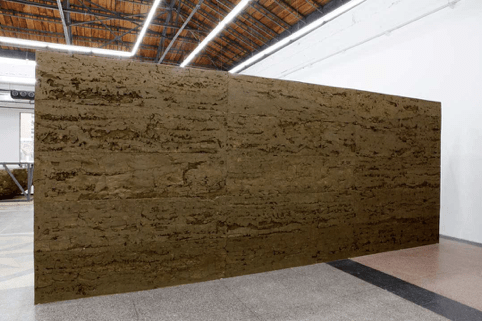
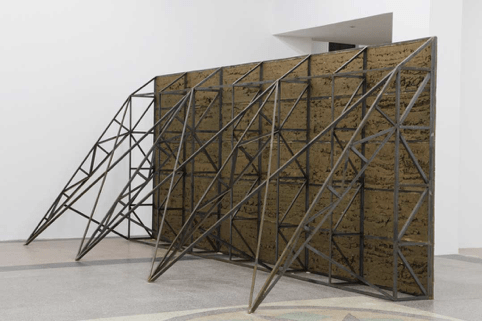
Installation view: Antenna Space, Shanghai, China
We also talked of my search for tree stumps to use as a raw material for yakisugi – a Japanese technique of charring wood in order to add value (aesthetic, utilitarian and monetary) by increasing water-resistant and fire-retardant properties thus enhancing its longevity and preservation.
Studio works were mostly in the following categories:
- More dried mud discs, with particular focus on the cracks and fissures.
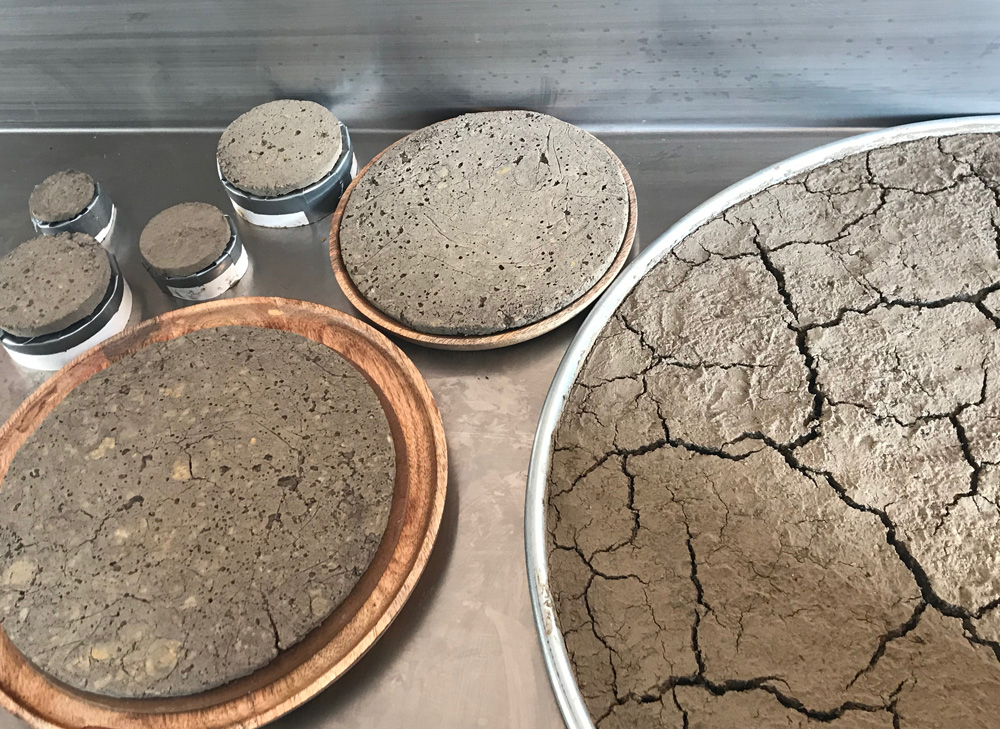
We discussed the practicalities of casting these discs in different materials. Plaster might well dissolve the dried mud and intermingle with it producing a less than optimal result. A casting latex might work well – more research required. We also discussed the possible use of concrete as both a casting medium and end product; it having more pertinence to my field of interest than plaster.
I appreciate the utility and solidity of concrete, and its use as a building material and containment device. I like the fact it is both ancient and modern and an amalgam of both the natural and manmade worlds. It is also subject to stress cracks of its own which could prove fruitful research-wise.
Dane posed the question of whether I might be keen to use specifically synthetic materials. I will ponder more on this but my initial response would be that it isn’t my main fascination point. Therefore if I used synthetic materials it would be to lend a definite quality or meaning to the artwork, probably as a counterpoint to some of the other materials used. (CCG industries might be worth checking out for casting materials and Jaycar for mould release agent)
- Cylindrical cast dried mud towers.

These were imbedded with root systems of varying fragility. Although retaining their cylindrical outer boundaries, these works curve as the varying drying rates of the mud, stones and roots pull and cause tension in different areas.
- Short video pieces.
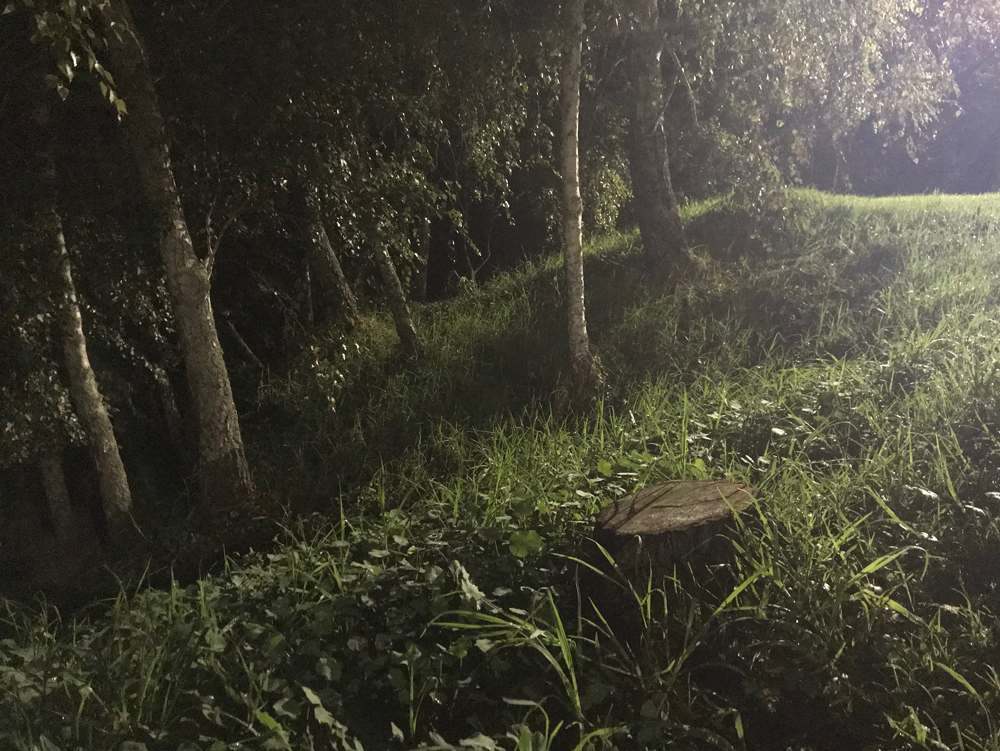
An experimental series of video works I filmed in the dawn hours over Anzac weekend. Each focuses on a tree stump (with other living trees or plants featured somewhere in frame for contrast). Titled “For the Fallen” (after the poem by Laurence Binyon recited at each Anzac commemoration as an ode of remembrance). I spent one minute in silence filming each tree stump. The meditative breath of the witness off camera can be seen in the gentle rise and fall of the framed shot; an honouring of the lost and destroyed. Grey Lynn Park, the site of these videos, has a colonial history all of its own; a continual re-evaluation of its physical worth through a series of expansionist policies: Native bush felled to become a literal wasteland – a Victorian refuse dump. Then, European saplings planted and a gradual gentrification as nearby land prices swelled in value, and a circumvolution as the non-native interlopers are steadily culled and replaced by endemic species. These works were created during Lockdown level 4 and as such there is a natural yet unnatural hush in this urban park, a turning back of time. If exhibited, I envision these pieces in a series, each screen featuring a single tree stump on a 1 minute loop with the volume turned up high so that en masse there is a cacophony of silence; an aural physicality to what is present and what is not. (Dane suggested a trial of viewing the footage sideways or upside-down as it can sometimes throw up a completely different reading.)
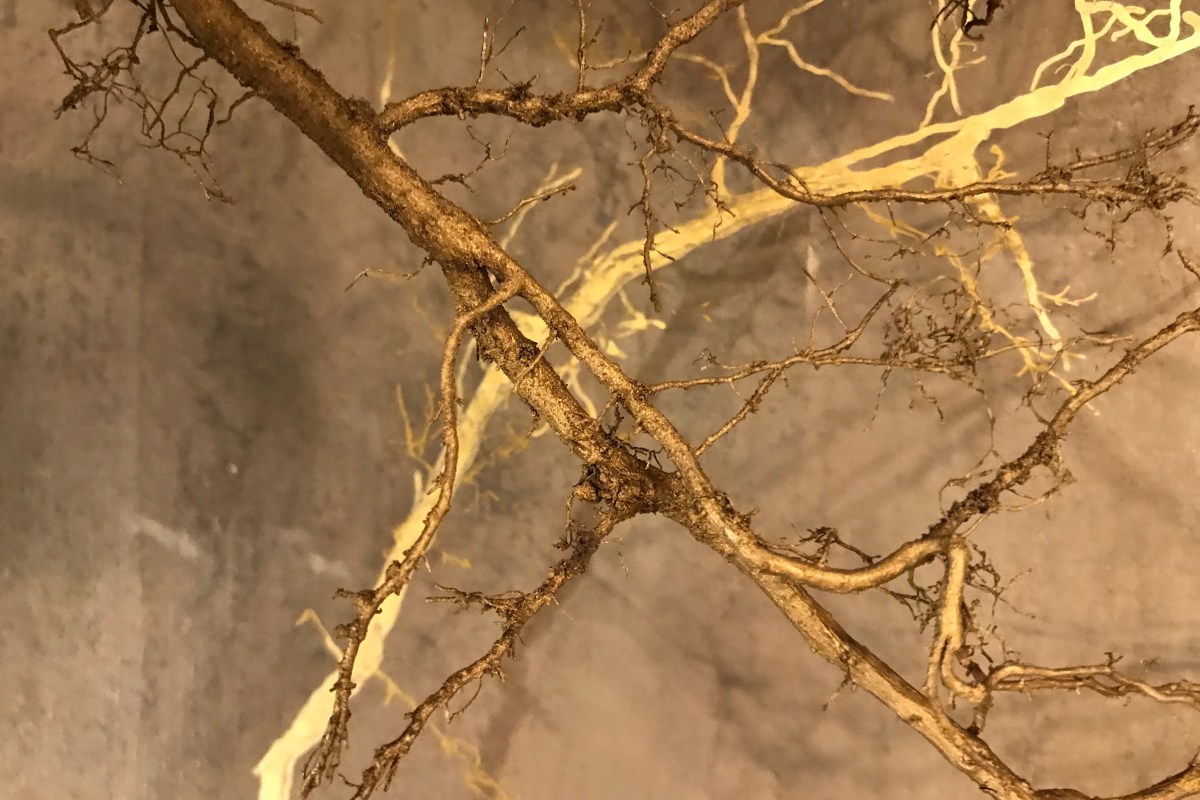
- Photographs and ethereal scans of composed interlacing root systems.
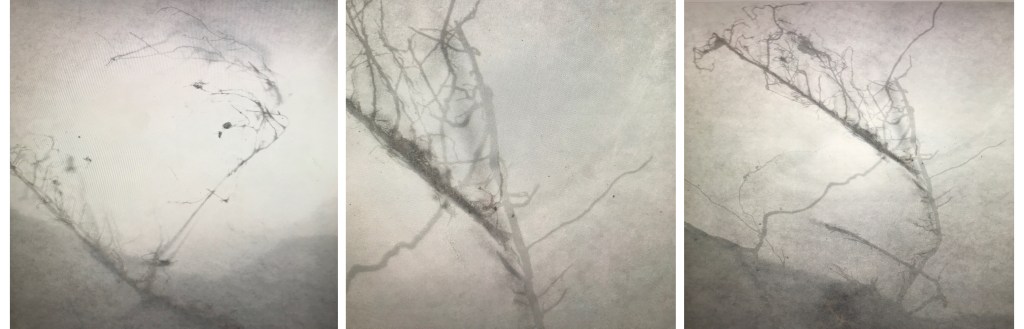
I am drawn to the elongated shadows of the intertwined venal entanglements; they too interlace but are flattened by their mono-tonal reflection: all shadows have one tone, one depth.
Recommended artists to research:
Robert Smithson – tree works
Matthew Barney – tree works cast in bronze
Peter Zumthor – and his use of trees in the Bruder Klaus Field Chapel (Germany 2007): A series of vertical cavities within the cast concrete walls of the interior space are the traces left behind by 112 burnt out tree trunks.
 Abbie Read