Critical reflections (July)

Group Crit (including Abbie, Claudia, Megan, Abigayle, Te Ara, Salle and Victoria):

After an initial cold read, here are some notes of the comments made about the artworks:

  • Circle used as containment
  • Reference to Rachel Whiteread
  • Like a petri dish; a specimen feel but scaled up
  • The mud disc is lost
  • Reparation Aesthetics by Susan Best might be worth looking at
  • Have you read any Heidegger? (The Origin of the Work of Art )
  • Earth – brute matter of the planet
  • Opposites happening at once
  • Do you intend to let go of something here – past work?
  • Presence/absence – a bit glib. It doesn’t do it justice
  • The circle as a formal device
  • What are you saying?
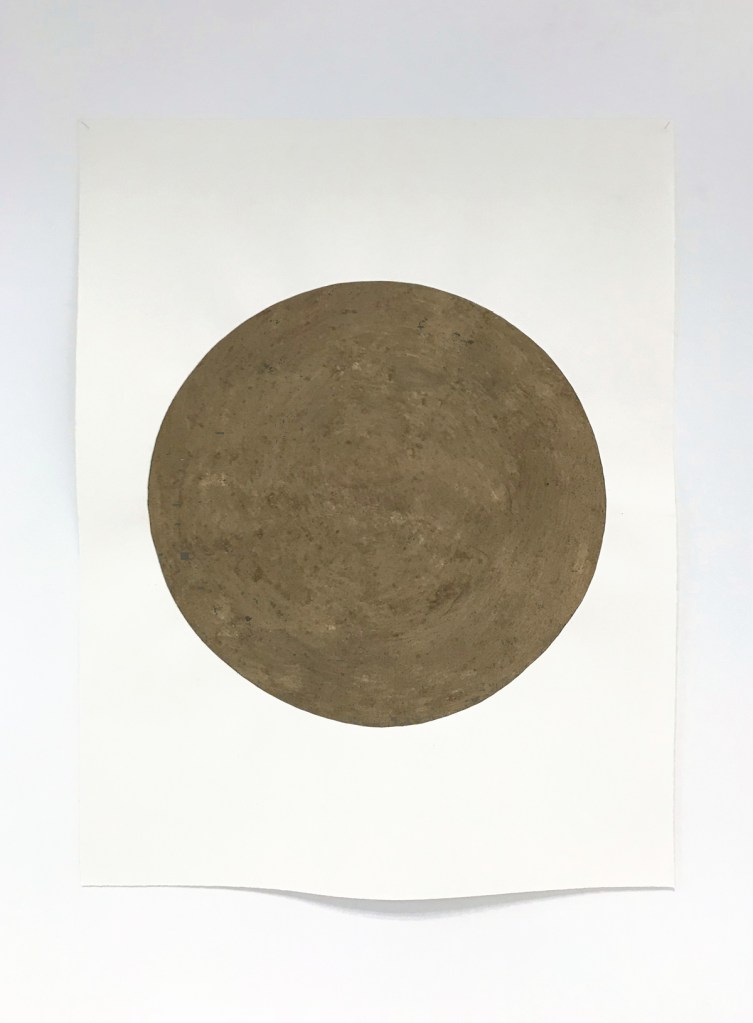
  • Presence and absence is all within work 2 (the earth painting and white laser cut)
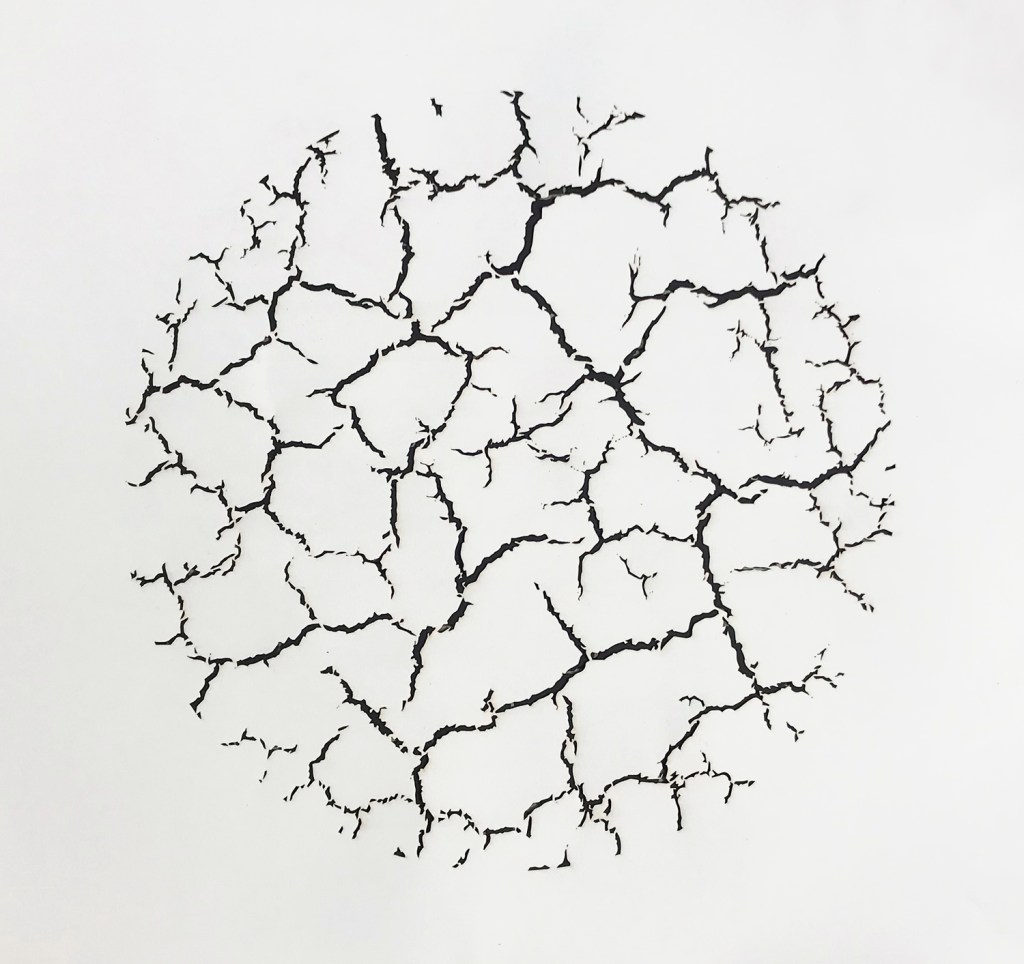
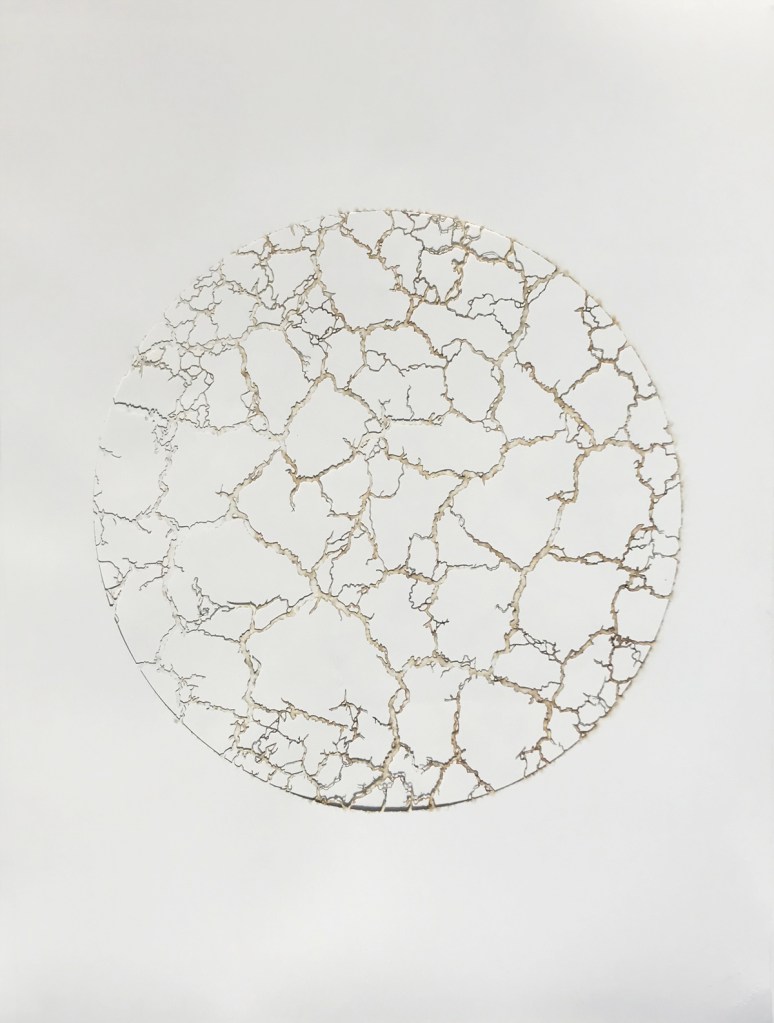
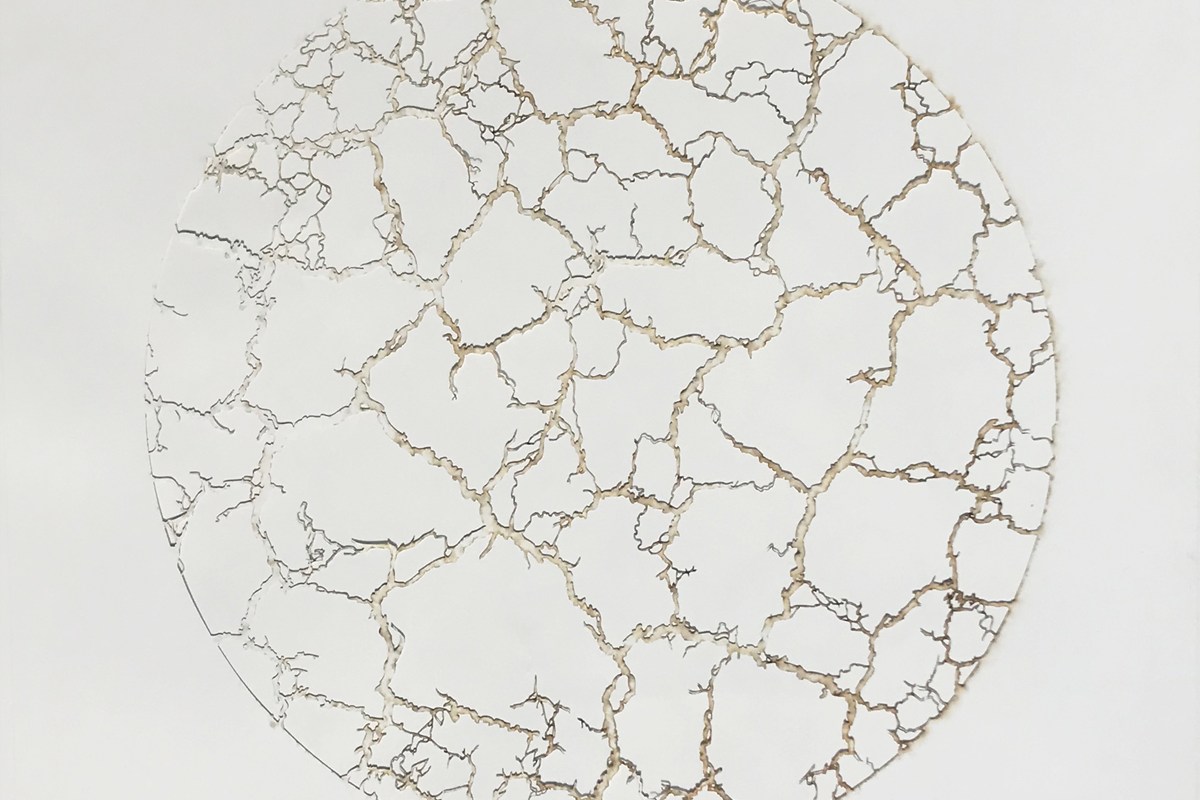
  • The laser cut works are good. Just displaying the 3 circles on paper would have been really strong
  • Practice based research (as opposed to research based practice) is what is happening. And through it you have come across something
  • Suggestion to look at the works of Alan Fletcher (MFA graduate)
  • Victoria is reminded of the work of Simryn Gill:
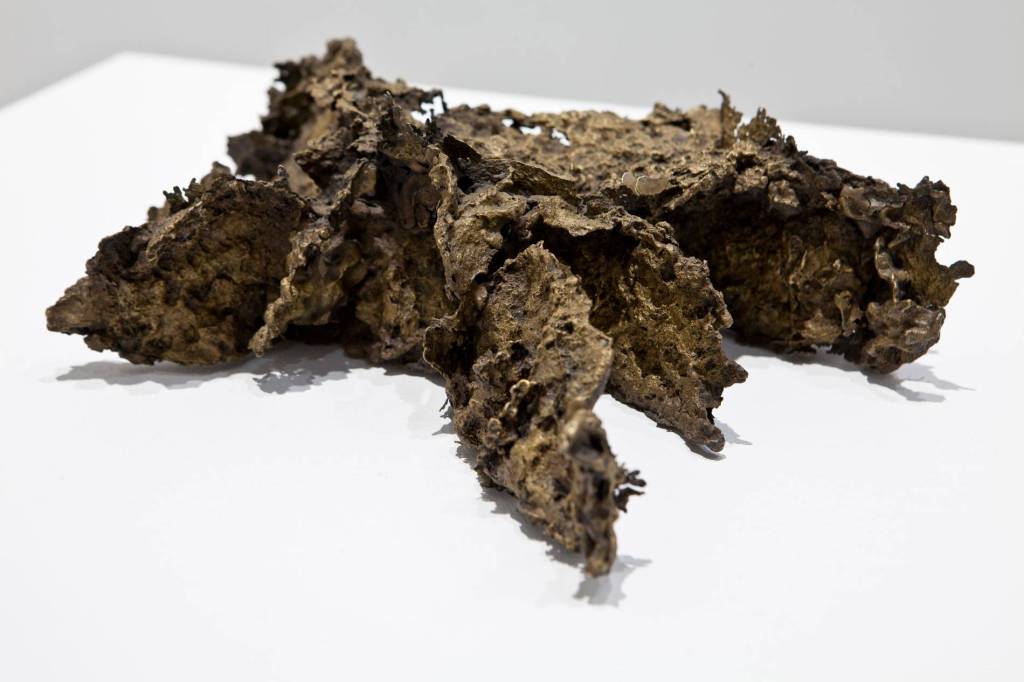
Simryn Gill Untitled (Interior) II, 2008

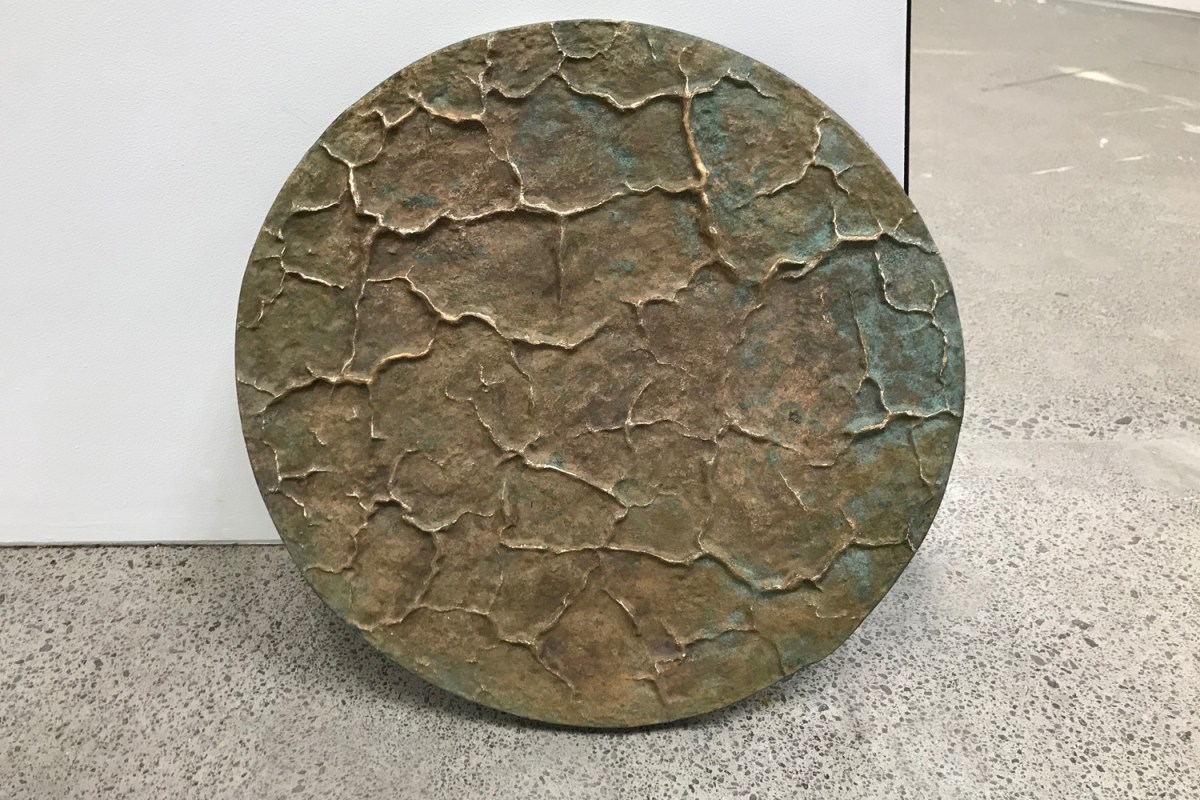
Cast in bronze from a crack in the ground formed during a long drought. The bronze makes permanent that which ordinarily is mutable and transient. It records but a moment in the cycle as the original earth rupture will continually change over time; through alternating wet and dry seasons, the crack filling with water and dirt then subsequently desiccating once again.

From the Examining Panel (Yolunda, Victoria, Balamohan, Dane and Elle):

  • Balamohan suggests that the poetry should reside within the artwork rather than within the artist statement. Be careful not to over repeat a motif.       
  • The work is more interesting when I speak of the processes used to make the works
  • Elle asks about the seriality timeline-wise
  • Further trialing of object and image placement might benefit the installation
  • Building a meaningful awareness of context (primarily contemporary) is important.
  • Questions asked:
What were the decisions around the installation layout?         
What lead you to make this work?  
How do you see the works speaking to each other?         
Where to from here?

Critical reflections – a discussion with Dane and Elle:

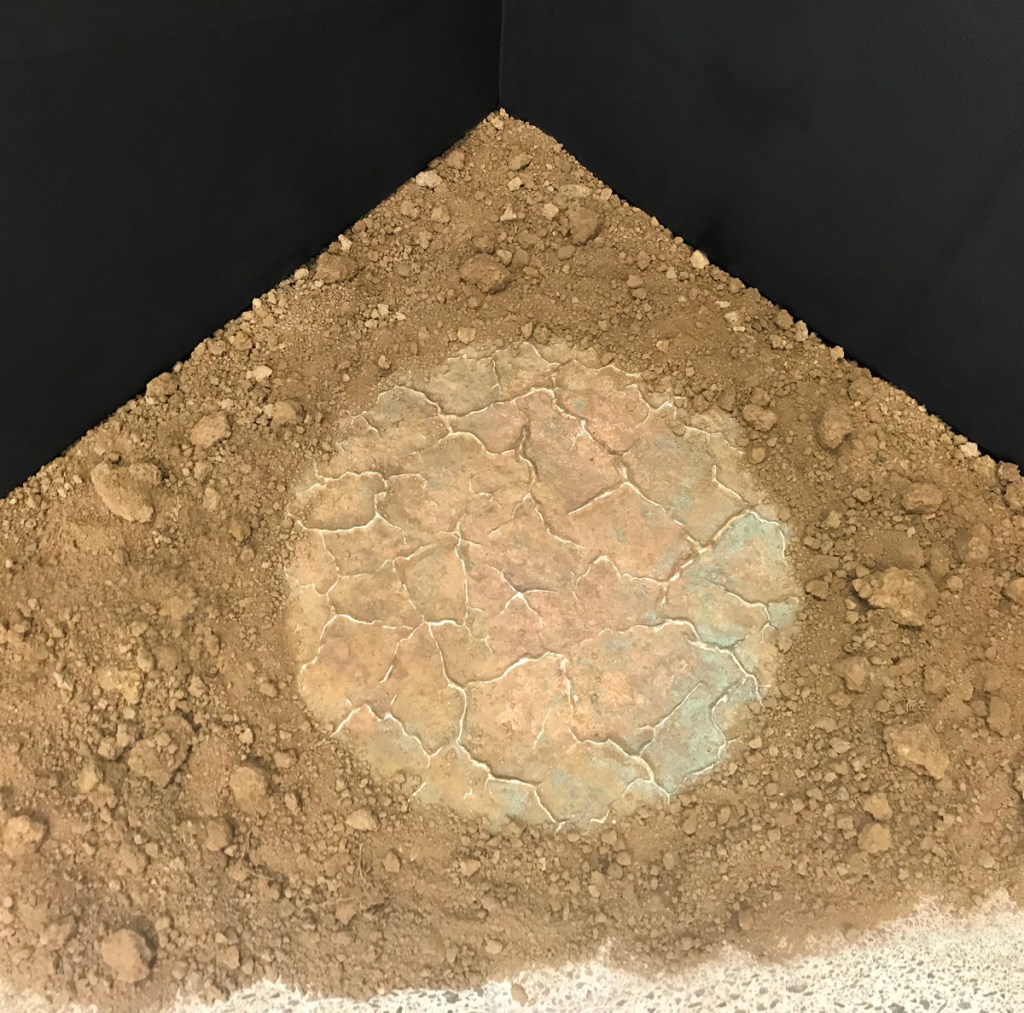
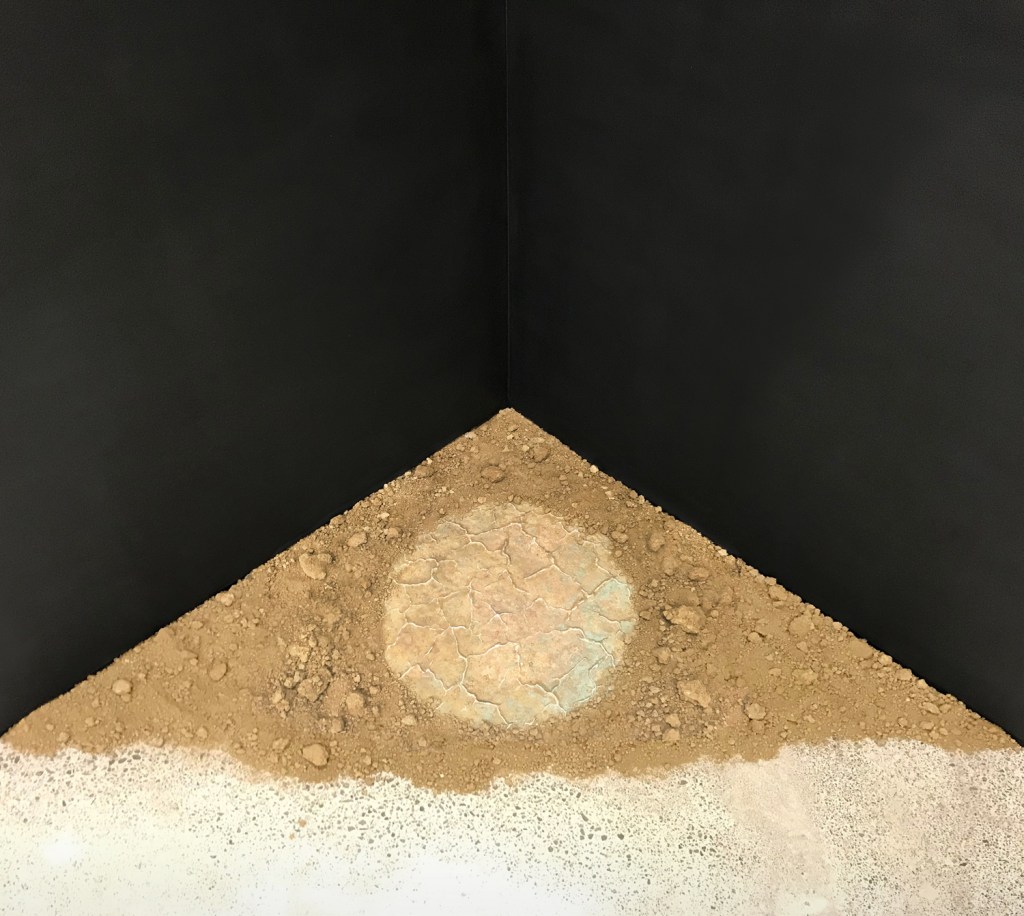
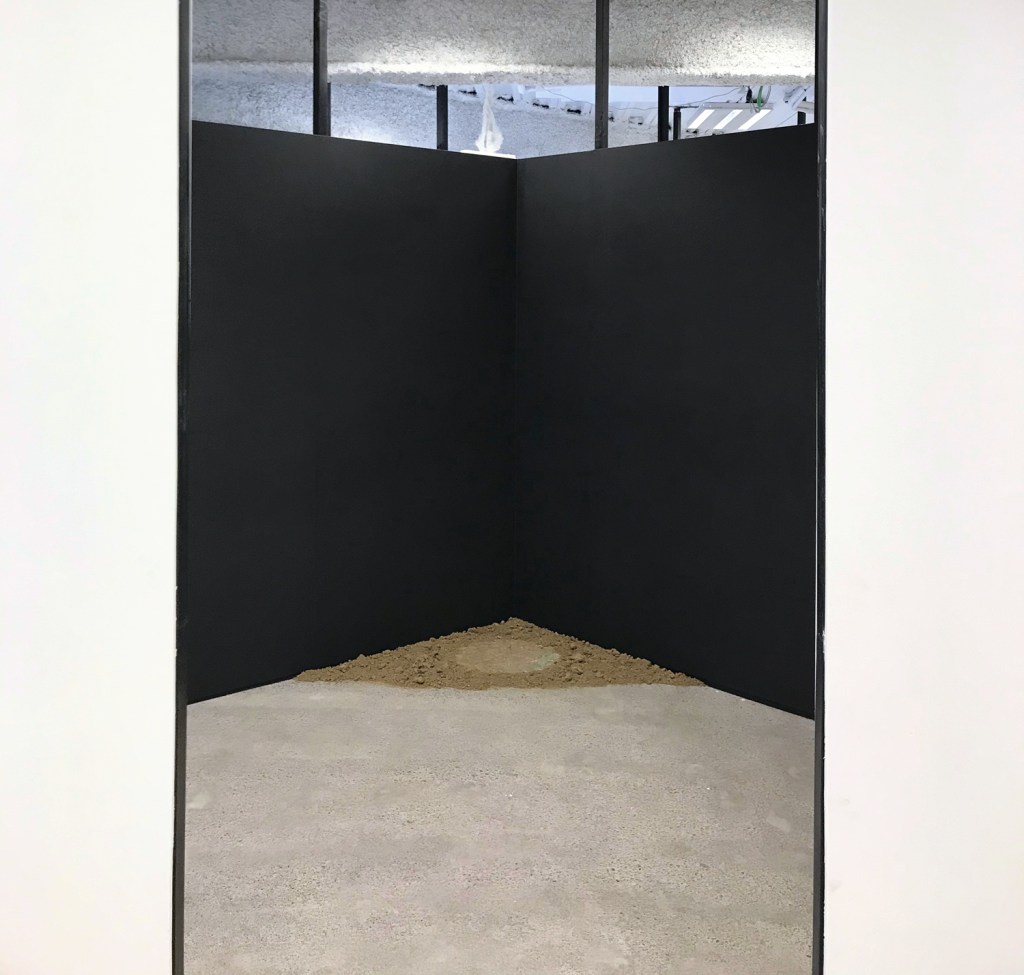
  • The soil was not needed on either of the ground works. It’s like an over-explanation of themes. I need to have more confidence in the audience to make the associations for themselves. My initial thought, in the placement of soil, was to juxtapose the free-flowing natural material alongside the dense, constrained and no longer potentially life-supporting bronze disc replication of it. I had worried that without the soil, the disc – a potentially ‘awkward’ object, might be too overbearing if left to stand on its own. 
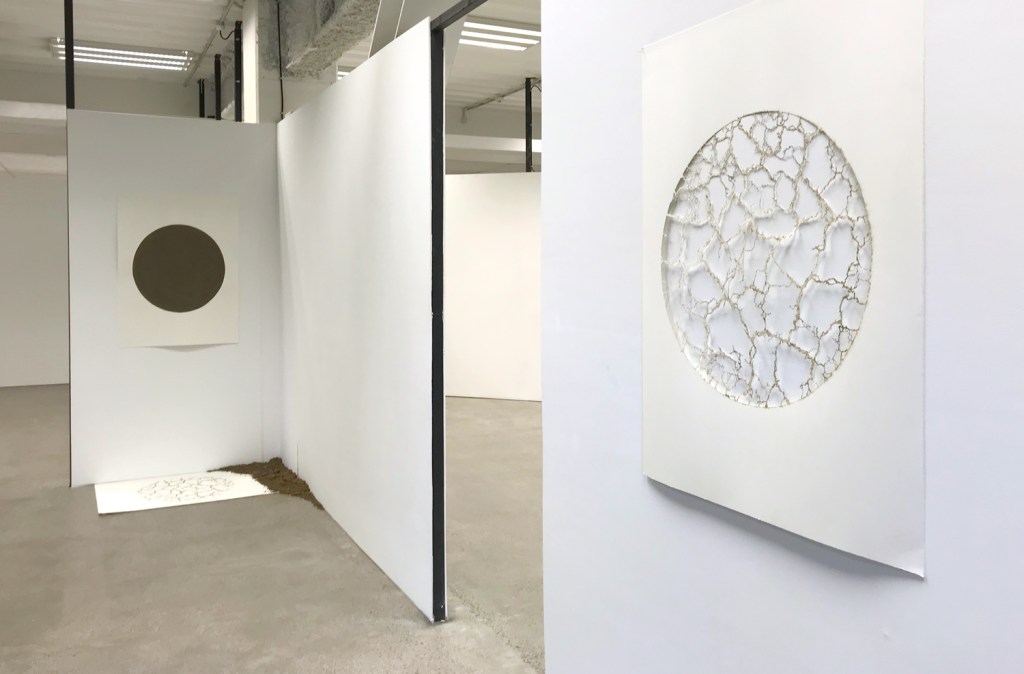
  • The earth circle painting and floor laser cut tucked in a corner could have benefitted from not being so tucked away. Trying the artworks in different configurations ands spaces to see how they work with each other would be of value.
  • Continuing working with paper would be a positive journey forwards. It might be useful to question the choice of the weight or type of paper used.

My Reflections:

This work stemmed from an exploratory stance of focusing on materiality and process, leaving all preconceived associations of meaning and intention behind. This is completely counter to my usual way of working. Though informative, I found this method to be not the most beneficial mode of art making with regards to my particular practice; as although encouraging me to fully encounter the medium at hand it ultimately leaves me with an object I have difficulty in comprehending. Making inexplicable artefacts is not my fascination point. My joy and drive comes from collating, creating and finding meaning and associations between objects. This exercise has helped me to understand and acknowledge that.
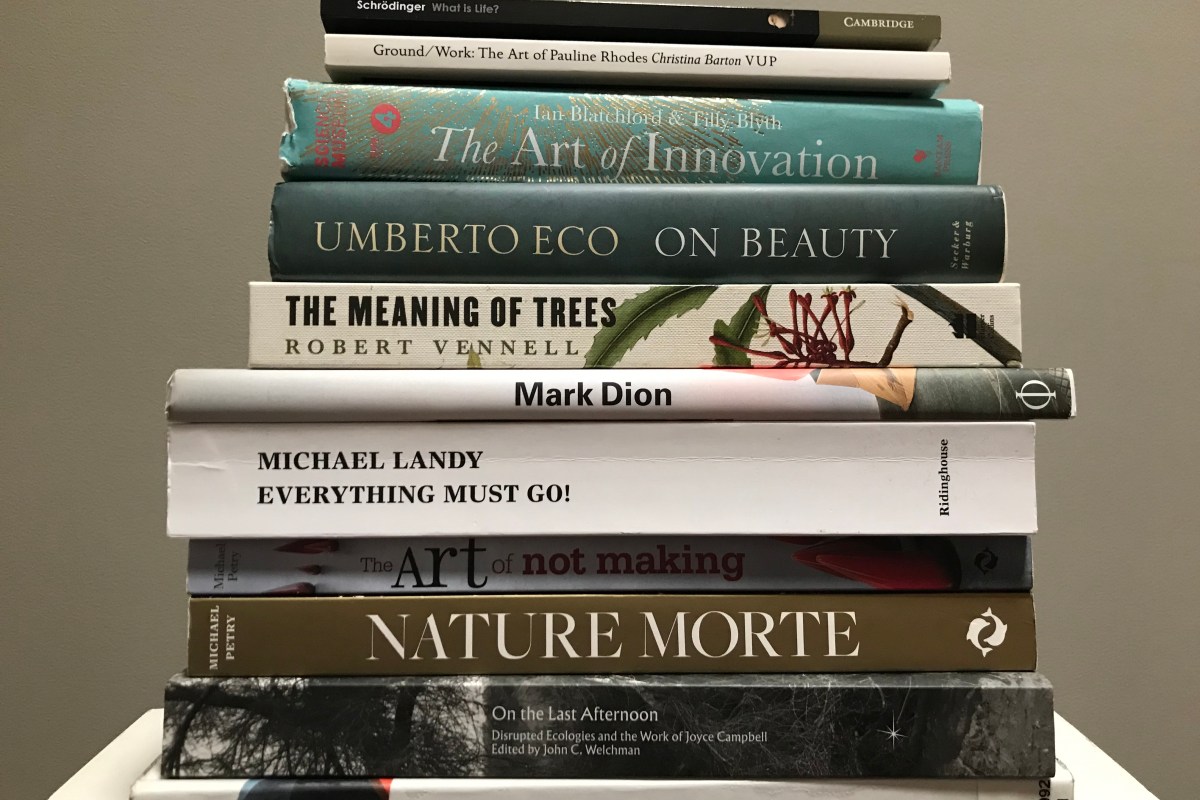
Reading List (ongoing)

Lowenhaupt Tsing, Anna. The Mushroom at the End of the World: on the possibility of life in capitalist ruins. Princeton: Princeton University Press, 2015.

Park, Geoff. Nga Uruora: The groves of life – ecology and history in a New Zealand landscape. Wellington: Victoria University Press, 1995.

Waghorn, Kathy (ed.). Kei konei koe/you are here: Mapping Auckland. Auckland: Auckland War Memorial Museum, 2011.

Petry, Michael. The Art of not making: The new artist/artisan relationship. London: Thames & Hudson Ltd, 2012.

Jeffery, Celina (ed.). The Artist as Curator. Chicago: The University of Chicago Press, 2015.

Tuhiwai Smith, Linda. Decolonizing Methodologies (second edition). Dunedin: Otago University Press, 2012.

Welchman, John C. (Ed.). On the Last Afternoon: Disrupted Ecologies and the Work of Joyce Campbell. Wellington: Adam Art Gallery, 2019.

Petry, Michael. Nature Morte: Contemporary artists reinvigorate the Still-Life tradition. London: Thames & Hudson, 2013.

Barton, Christina. (Ed.). Ground/Work: The Art of Pauline Rhodes. Wellington: Victoria University Press, 2002.

Blatchford, Ian and Blyth, Tilly. The Art of Innovation: From Enlightenment to Dark Matter. London: Transworld Publishers, 2019.

Barbican Art Gallery (Ed.). Magnificent Obsessions: The Artist as Collector. London: Prestel, 2015.

Bolt, Barbara. Heidegger Reframed. New York: I.B.Tauris & Co. Ltd, 2011.

Adler, Dan. Contemporary sculpture and the critique of display cultures : tainted goods. New York: Routledge, 2019.

Vennell, Robert. The Meaning of Trees: The history and use of New Zealand’s native plants. Auckland: HarperCollins, 2019.

Landy, Michael. Everything Must Go! London: Ridinghouse, 2008.

Graziose Corrin, Lisa; Kwon, Miwon and Bryson, Norman. Mark Dion. London: Phaidon Press, 2011.

Putnam, James. Art and Artifact: The Museum as Medium. New York: Thames & Hudson, 2001.

Lippard, Lucy R. Undermining: A wild ride through land use, politics, and art in the changing West. New York: The New Press, 2014.

McCarroll Cutshaw, Stacey; Niania, Richard and Ennis, Ciara. Joyce Campbell: Te Taniwha/Crown Coach. Los Angeles: Pitzer College, 2012.

Laird, Tessa. LA Botanical: Joyce Campbell. Los Angeles: G727, 2006.

Eco, Umberto. (Ed.). On Beauty: A history of a western idea. London: Secker & Warburg, 2004.

De Souza, Allan. How Art Can Be Thought: A Handbook for Change. Durham: Duke University Press, 2018.

July Seminar 2020

In the Presence of Absences

“For all representation is, by definition, a representation of an absent object”

– Eduardo Grüner (1)

.

The disc of dried earth, a still-life of divergent cracks and fissures.

Soil and precious ores borrowed from the earth; an unsolicited collaboration.           

Its temporal fragilities here replaced, here supplanted. 

(This disc of dried earth exists no longer; dust to dust.)

.

The incised image, graphic by nature, and thus a reduction; a distillation of the essential. 

An allegorical render of something other; something elsewhere, removed or missing.

(This tracery is both real and unreal; a consideration of what is and what is not; what is stated and what is implied. It exists, tenuously.)

.

For it is the space betwixt the notes which makes the music. It is the cracks between that evidence the life within.

Artworks:

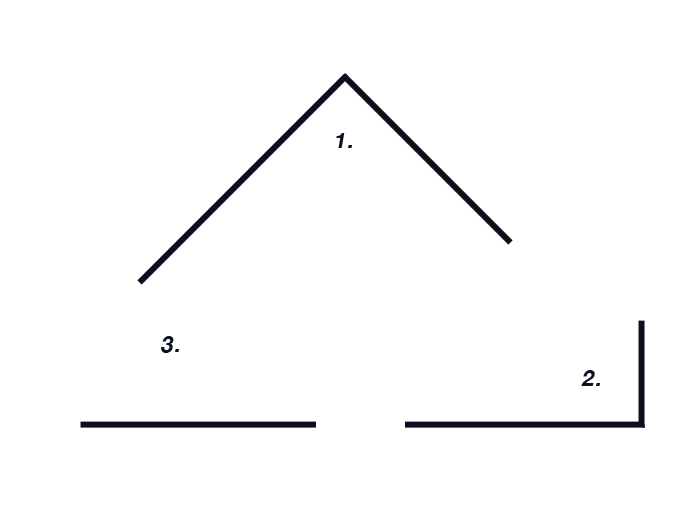
1. [Bronze cast earth disc, earth]

2. [Earth painting with raw umber pigment and grated charcoal, Laser-cut white paper, earth]

3. [Laser-cut paper on opposite walls]

(1) Eduardo Grüner, ‘La invisibilidad estratégica, o la redención política de los vivos: Violencia política y representación estética en el Siglo de las Desapariciones’, in Ana Longoni and Gustavo Bruzzone (ed.), El Siluetazo, Buenos Aires: Adriana Hidalgo, 2008, p. 285 as quoted in mnemoscape, issue no.2.

Abbie Read  In the Presence of Absences  2020. Installation view [1.] Bronze cast earth disc, earth.

.

Abbie Read  In the Presence of Absences  2020. Installation view [2.] Earth painting with raw umber pigment and grated charcoal, Laser-cut white paper, earth

.

Abbie Read  In the Presence of Absences  2020. Installation view [3.] Laser-cut paper on opposite walls

Exhibition Review

John Reynolds and Jin Jiangbo Performative Geographies 

14 July – 8 August 2020,  Starkwhite, Auckland

With a particular focus on John Reynolds, Fire and Ash, 2019.

Performative Geographies, 2020, installation views  (John Reynolds to the left, Jin Jiangbo to the right)

Performative Geographies at theStarkwhite gallery features the artworks of New Zealand artist John Reynolds and Chinese artist Jin Jiangbo, arranged in a literal East/West divide. These thematically conjoined representations of islands, both terrestrial and semi-mythological, explore notions of ‘islandness’, [1] and the mutability of meaning contained within that word.

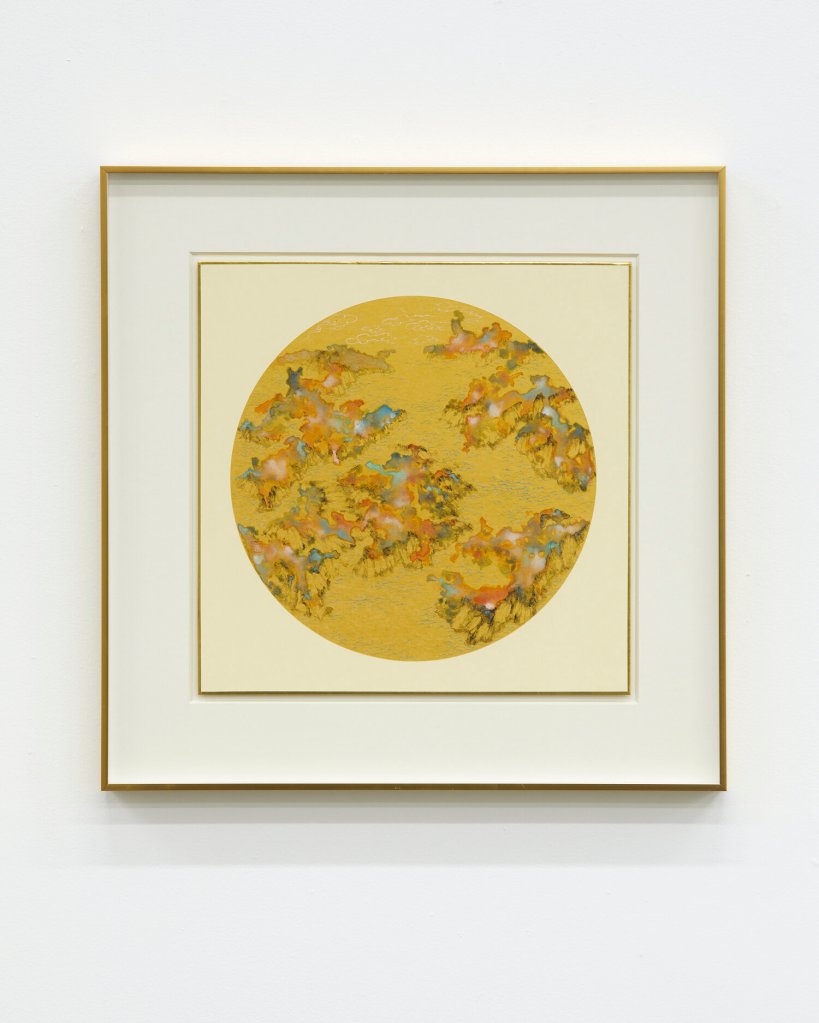
Jiangbo’s works exude a quiet opulence. They are precise and compact; colourful, ethereal ink renderings on a circular gold background, where depictions of landmarks exhibit less solidity than the (Hanzi) Chinese characters printed nearby.

Jin Jiangbo, Penglai series, 2019 Ink and wash on card 600 x 600 mm framed

The delicate gilt circles of Jiangbo’s sacred and mystical Chinese landscapes both echo and contrast with the glistening silver of Reynolds’ more organic-shaped imposing volcanic cone, as they complement each other from across the room. Both artists using localised mythology as a generative impetus.

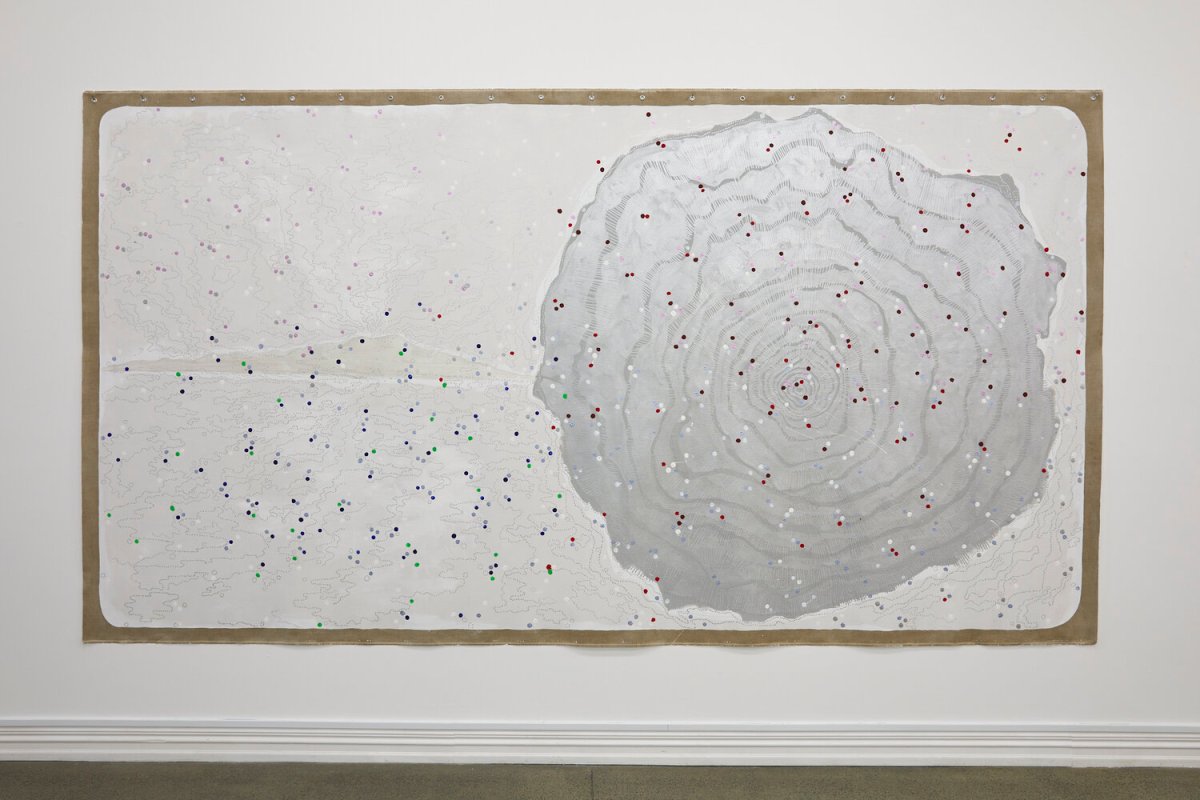
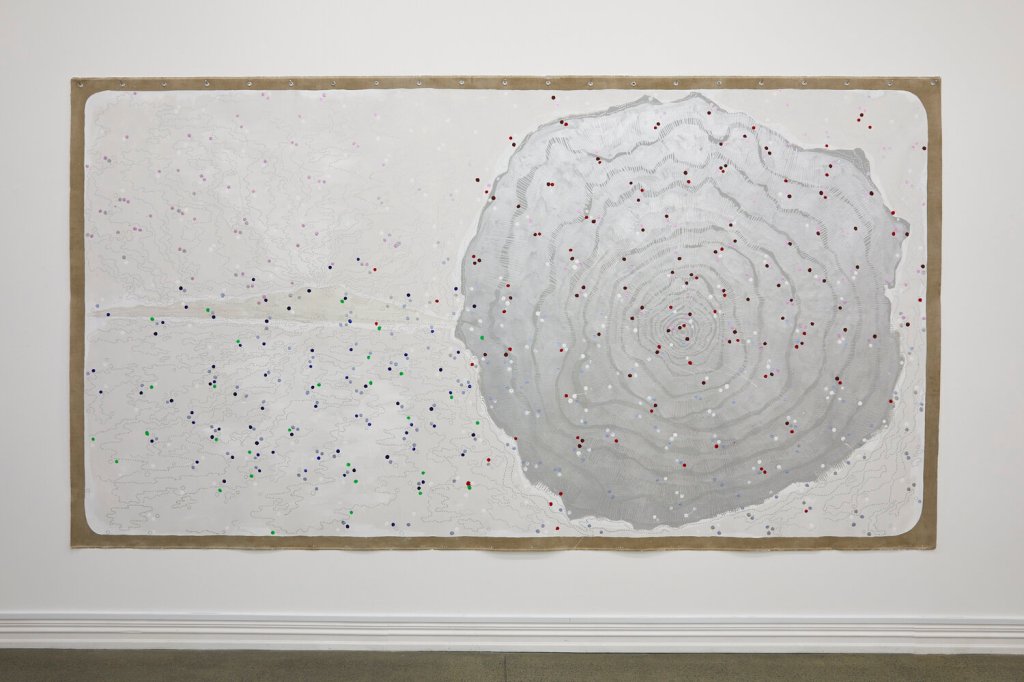
 John Reynolds, Fire and Ash, 2019, paint marker, pencil and acrylic on unstretched linen. 2.1 x 4 metres.

Reynolds’ work often alludes to literature, languaging (both written and pictoral), architectural structures, and site-specifity. In this instance, the title ‘Fire and Ash’ and its subject matter arose from a Sarah Treadwell essay about Austrian geologist Ferninand von Hochstetter’s 1859 map surveying the Auckland volcanic region.[2] In Reynolds’ copy of this essay, the pencilled notations in the margin highlight connotations which resonate with him, and show their influence on his choice of mark-making: Treadwell describes the landscape as “shimmering with dots of volcanic activity” [p.27] and “flying over the perforated and permeable city…weaving between the cones.” [p.28] These ‘perforations’ become ideally characterised by Reynolds’ signature diagrammatic motif of dots and dashes.

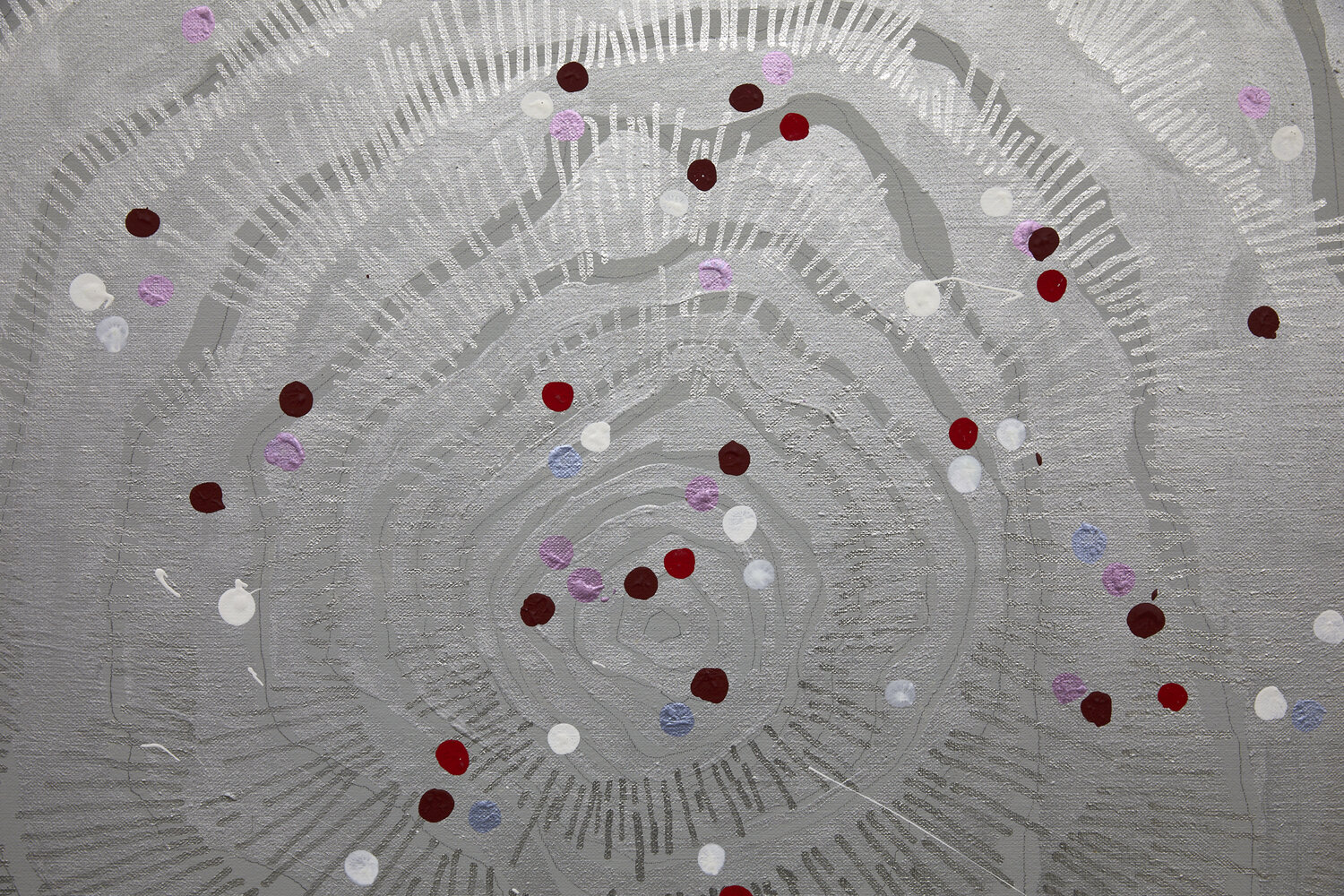
A seemingly amorphous iridescent silver form of irregular concentric undulations occupies much of the right hand side of the large Belgian linen canvas. Ray-like striations in metallic marker emanate from the centre. (Later these will be understood as the contours of terraced terrain.) A familiar semi-transparent silhouette in the background reveals itself as Rangitoto, at which point the striking silver shape becomes discernible as the same; a simultaneous plan and elevation of the picture-postcard Auckland landmark. “Which is about as figurative as I get”, quips Reynolds at his floor talk. [3] “If I burden the artwork with too much figuration, it loses some metaphoric undertone.”

The white-washed background carries intersecting stippled swirls, that meander and eddy as if in currents of wind or water. These playful trails and traces are interspersed by clusters of coloured dots: blues and greens proliferate over the horizon line where sky would meet sea, and more dusky reds and lustrous pinks over the apex of the volcano. On the one side, the rhythm and repetition of the lines free-flowing, and above the petrified lava cone more structured and static; emphasising the stoic perceived permanence of this venerable mountain.

John Reynolds, Fire and Ash (details), 2019, paint marker, pencil and acrylic on unstretched linen. 2.1 metres x 4 metres.

The slight tilt on the horizon line hints at a subterranean instability and lends a certain tension to the piece. This minor shift, possibly not borne of conscious intent, is nevertheless accepted as a relevant reminder of the underlying precarity of living in a volcanic zone; A terra firma not so firm; a portent of impermanence perhaps. Hochstetter’s map evidences the turbulent histories that has seen Auckland’s landscape ravaged by both lava fields and urban domestication. As the viewer’s eye navigates across the peaceable pale leylines of the canvas, the threat and fiery force of potential destruction is, in this moment, calm. The apparent disparity between the geometrical order of urban life and the geological knowledge of the chaotic power that may one day be unleashed is buried here, for today the mountain sleeps. It is perhaps this chaotic aspect that Reynolds is drawn to. His preference for using spray paint and oil sticks due, in part, to those mediums having “just the right amount of lack of control”. [4] Provisionality is a consistent theme within much of Reynolds’ work. His use of certain symbols, his signpost drawings for example, seem almost to be placeholders, not fully present or permanent, awaiting supplantation. So too Rangitoto. 

There is a claiming, an implied ownership in cartographical classification. To map a place privileges certain subsets of information. It tells the subjective story of a place and of a time. If a map is, in essence, the illustrative dissemination of a set of selective data, then this too might be considered a map; the legend of which is locked away, as we are asked to bring our own set of perceived associations. This artwork lies within an intersection of painting and drawing, with an emphasis on mark making over definite figuration. Colour, pattern and line are utilised to delineate spatial boundaries and indicate inherent interdependencies.

Reynolds often explores the concept of time as artistic medium. From the sixty-second paintings for the Vacancy exhibition, Te Tuhi (2004), to Snow Tussock and Golden Spaniard (2007/2008), dubbed ‘the slowest artworks in New Zealand’, [5] which will only find their fullest expression in successive decades. Here, Reynolds questions the notion of stasis; a literal still life, or more accurately, a potentially explosive and destructive, currently dormant life force in its temporal docile state. Much like his outdoor art works, this is a topological conversation, a contemplation of shared histories of natural and manmade interventions in the landscape.

A timely and pertinent exhibition: in the midst of a global pandemic, there is currency in the term ‘isolation’; a word with the same etymological origin (insula – Latin) as the word ‘island’, meaning ‘standing detached from others of its kind.’ [6] A fact not lost, I am sure, on an artist noted for his adept appliance of languaging.

References:

[1] Laurence Simmons, Performative Geographies, Stark White Gallery:  https://www.starkwhite.co.nz/exhibitions#/performative-geographies-1/

[2] Sarah Treadwell, “Hochstetter’s Map: Flight over Auckland”, in Kei konei koe/you are here: Mapping Auckland, ed. Kathy Waghorn (Auckland: Auckland War Memorial Museum, 2011).

[3] John Reynolds floortalk, Starkwhite Gallery, 18th July 2020

[4] Shirley Horrocks (Director), Questions for Mr Reynolds, 2007: https://www.nzonscreen.com/title/questions-for-mr-reynolds-2007/overview

[5] Roger Horrocks, “John Reynolds Painting, Planting and Performance”, Art New Zealand, Issue 122 (Autumn 2007): https://www.art-newzealand.com/Issue122/reynolds.htm

[6] Online etymology dictionary, accessed 1 August 2020 https://www.etymonline.com/word/isolated