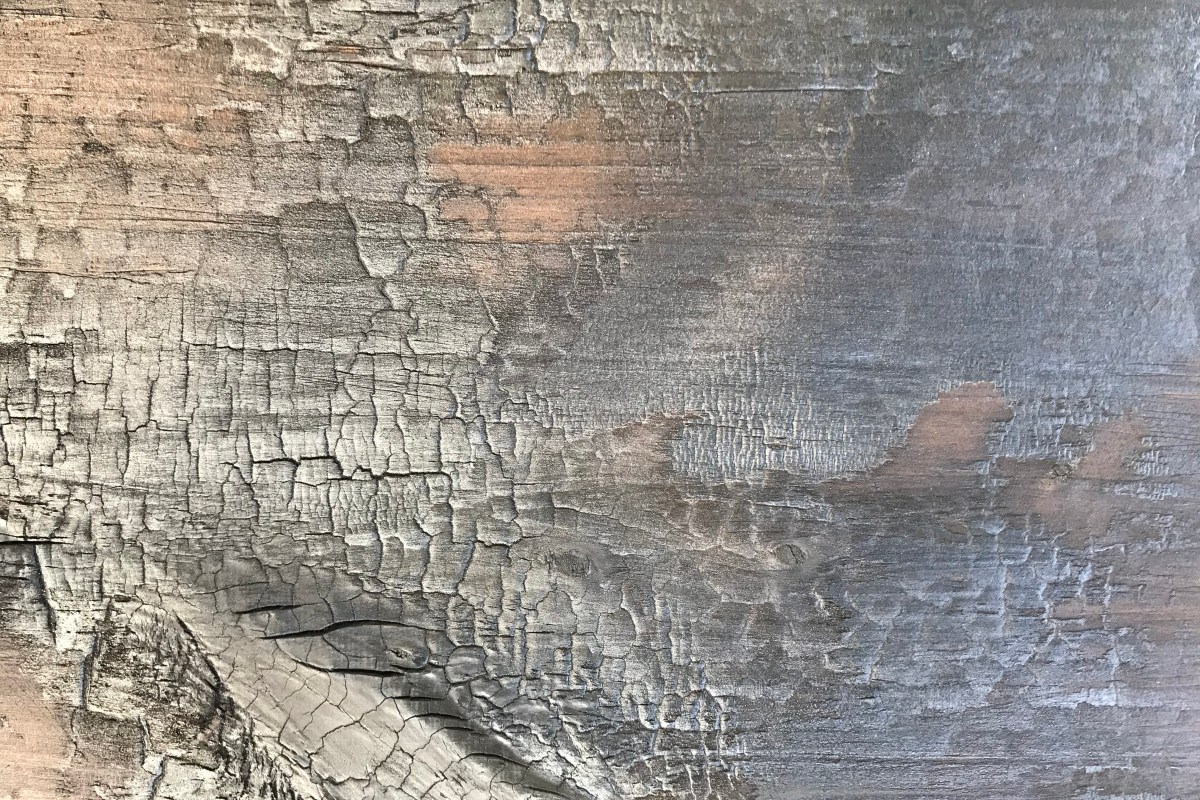
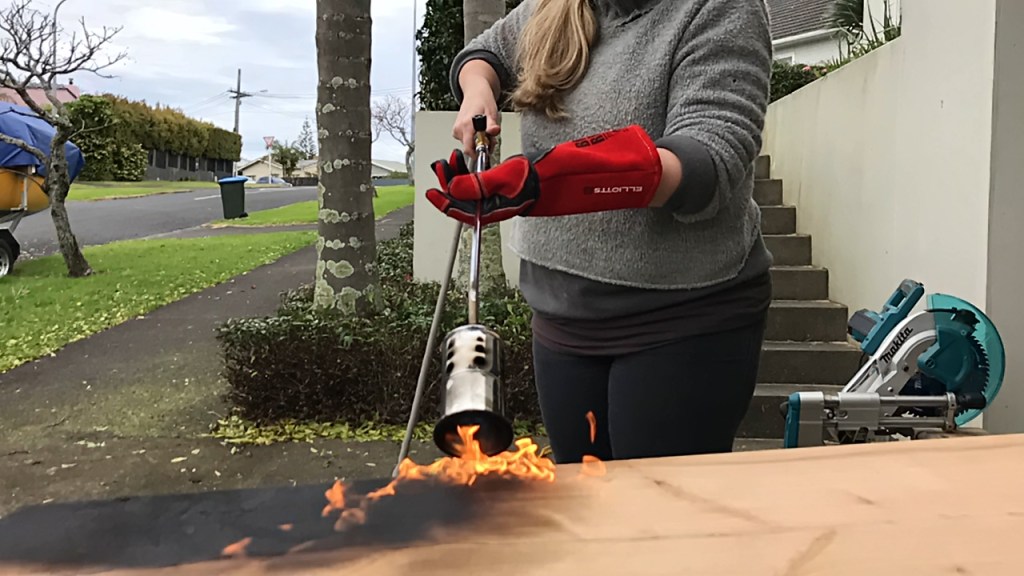
The process of charring timber preserves it. In burning off the more combustible outer surfaces, the wood becomes fire retardant, water resistant and thus less susceptible to decay. This seemingly destructive act is conversely an act of conservation. The technique is a borrowed one; an acculturation, a non-native cross-cultural entanglement.
Yakisugi is a traditional Japanese technique. Yaki means ‘to burn’, Sugi refers to cypress (cryptomeria japonica) in particular. Often known as Shou sugi ban in the West, though this may be a misnomer:
” In Japanese colloquial as well as formal industry terminology our product is called「焼杉」or “yakisugi”, written with two Chinese kanji and pronounced with the Japanese phonetic pronunciation even though it is a compound word. It might be a compound kanji word with an indigenous reading due to specifically being a Japanese technology or maybe due to the material’s vernacular origin, but nobody really knows. 「焼杉板」is how the word is sometimes written, with a third kanji added to make the word “yakisugi-ita”. This means the actual word used does not follow the textbook linguistic pattern, therefore the misreading as “shou sugi ban” is probably from a foreigner looking up each character in a dictionary independently and assuming the pronunciation follows the standard pattern.”
Nakamoto Forestry, “Yakisugi” Or “Shou sugiban”, https://nakamotoforestry.com/yakisugi-or-shou-sugi-ban-learn-what-you-should-call-it-and-why/ (Accessed 2 November 2020)
I enjoy the chance exchanges and slippages created through translation from one cultural context to another; The act of borrowing subtly creates things anew.
 Abbie Read