Contextual Reflections

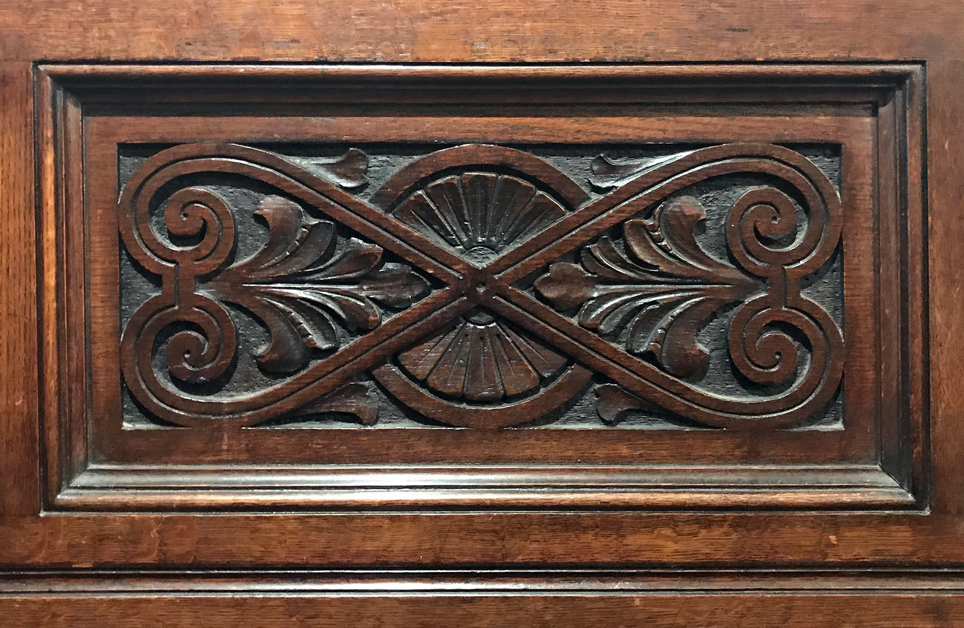
wooden panel from the grand staircase, Pah Homestead, Auckland

Working mostly with materials garnered from the natural environment: with wood, with clay, with bone, I seek to explore their innate connotations to the New Zealand landscape and its composite stories and histories. My curiosity lies in the pairings of objects, their relationship to site and the dialogues held within. I see my role as a collector, collator and assembler; part archivist, part storyteller. 

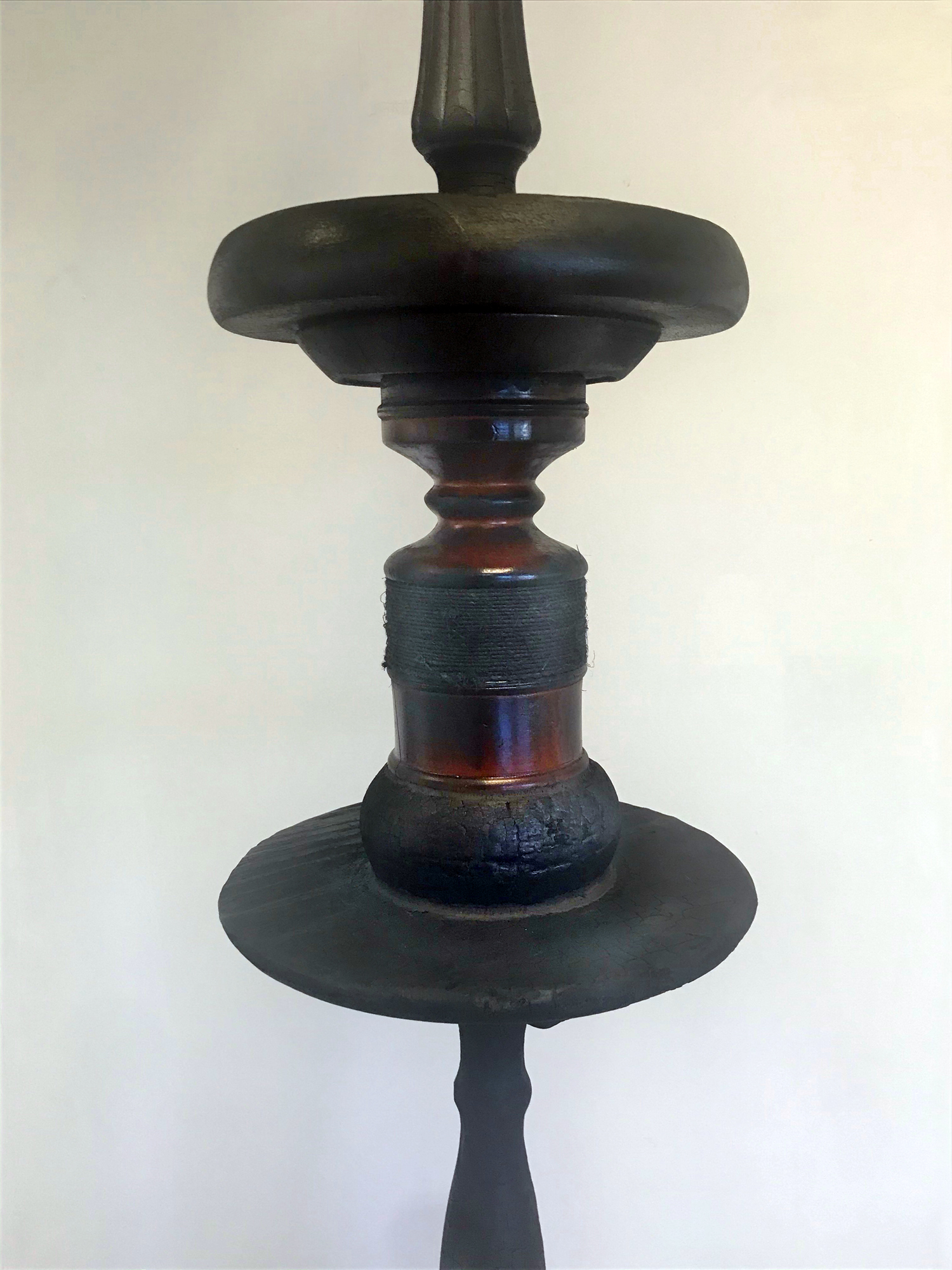
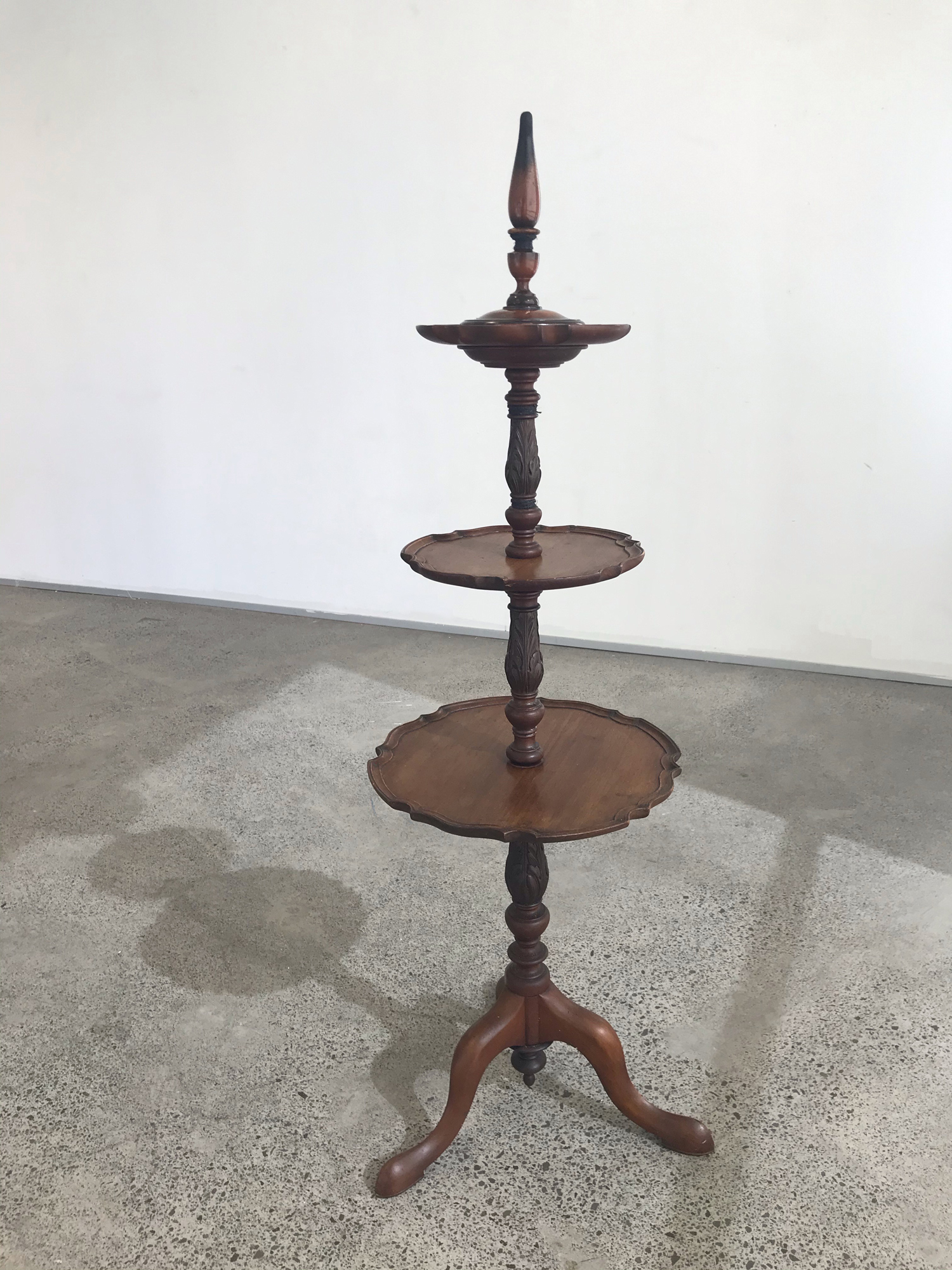
I am drawn to the use of readymades as raw material; specifically, at present, wooden artefacts relating to colonial furniture. In this there is an acknowledgement of the lineage of nameless artisans who first created these objects; a usurping of their knowledge and skills, a deposing of their ‘authorship’; a new ‘colonisation’ as it were. I also consider timber as a living readymade, as both commodity and archive, biographical traces chronicled within its rings and contours.

I am interested in the relationships between native and non-native flora, of the exchanges that take place and the losses induced. I am interested by the canonical systems that designate certain species as ‘weed’ and how these classifications evolve and dissolve throughout differing timelines and geographies. I am interested in how migration through time and physical space seemingly alters intrinsic worth and perceived usefulness and of how this ratio of value and utility is a complex balance.

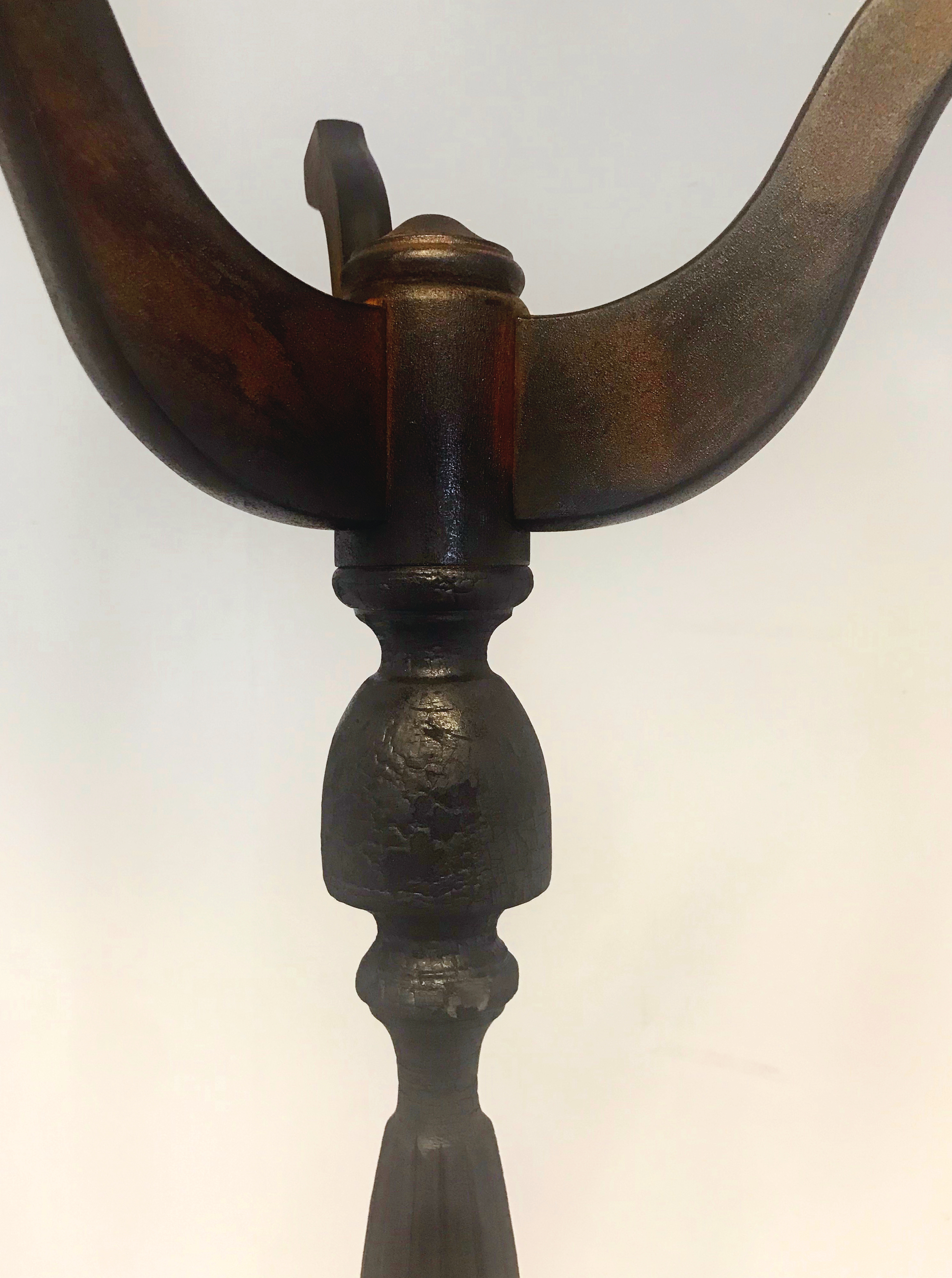
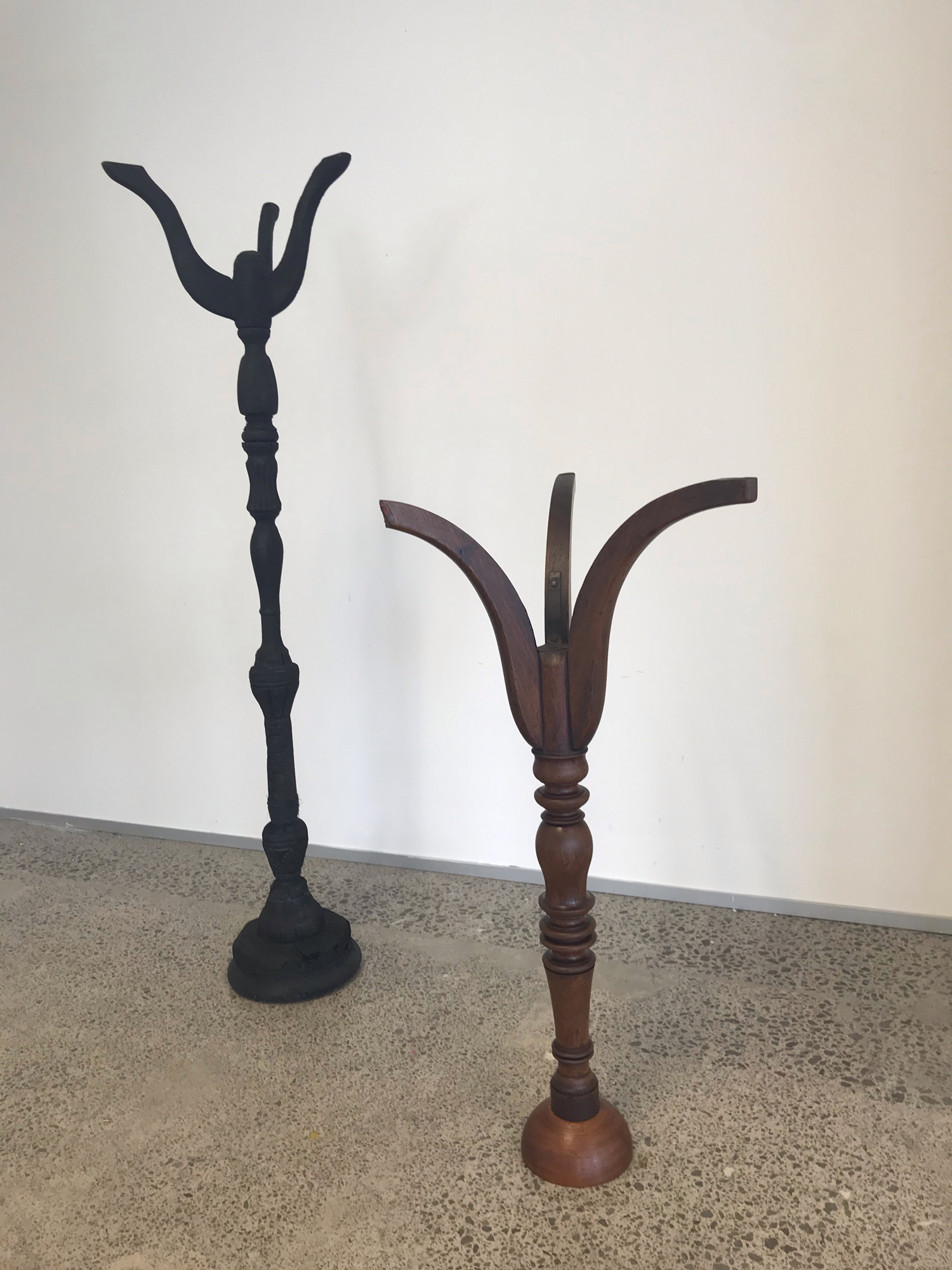
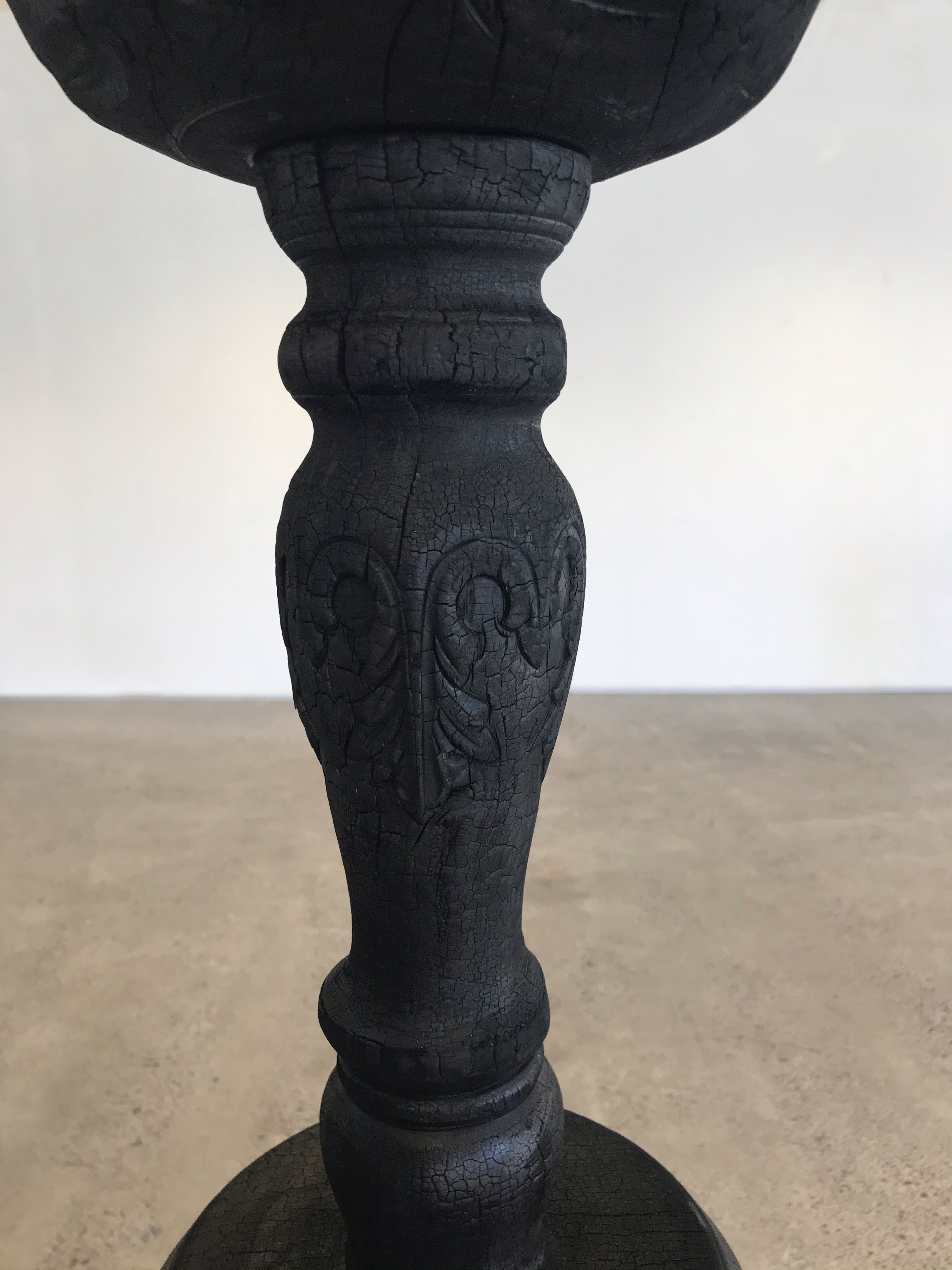
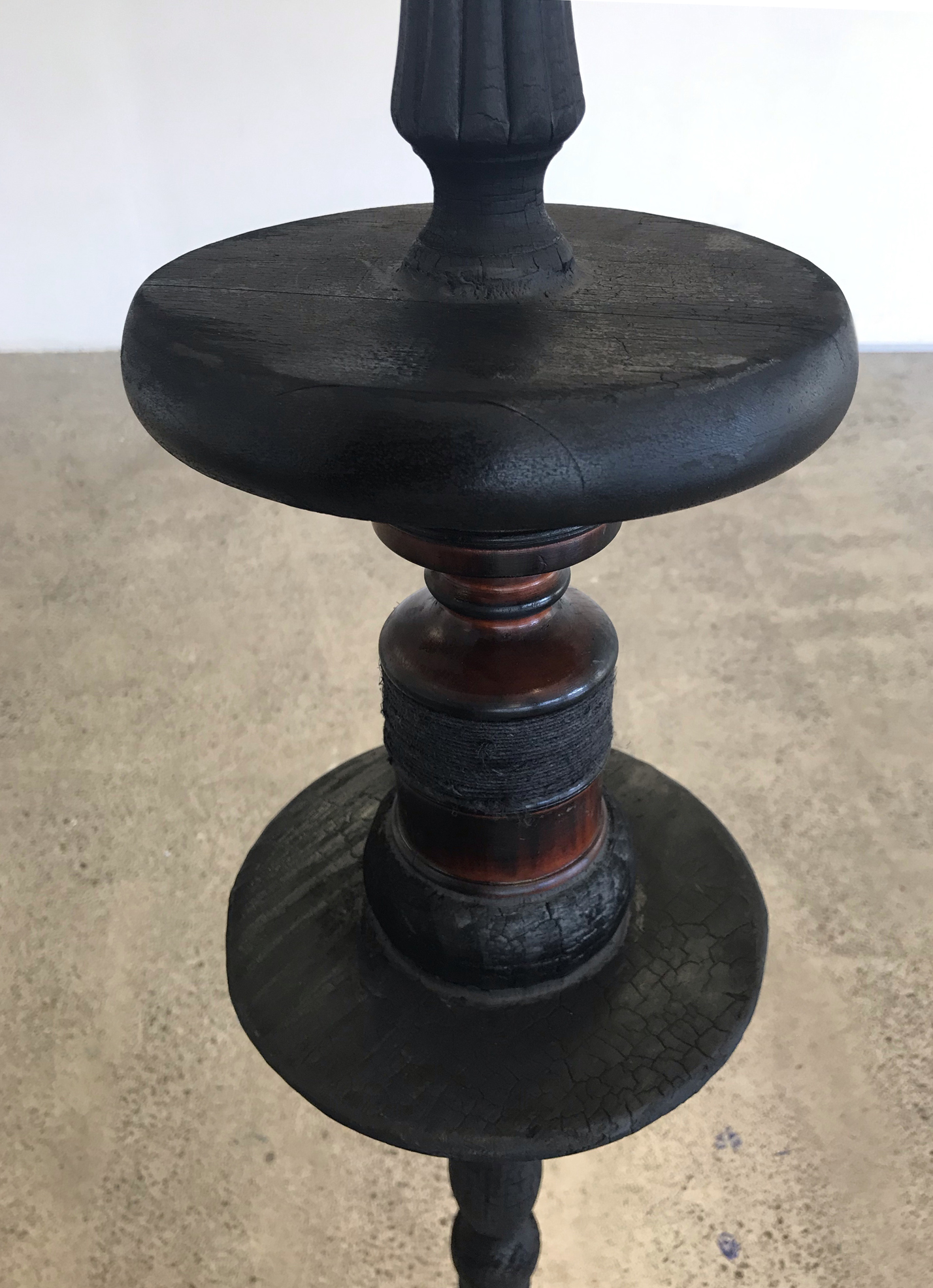
My practice currently involves the process of charring timber. I delight in both the aesthetics and symbolic pertinence of the action in its many iterations. The use of traditional Japanese yakisugi techniques, itself an act of acculturation, focuses on the dualities of preservation and decay; a seemingly destructive gesture, conversely promoting the conservation of the wood. Later artworks have focused on the burning process as an eradication, an enforced entropic happening, invoking a sense of loss and melancholy. At present, the charring relates more to homogenisation; a blurring of the differentiation between materials or geographical and cultural origins. It references the histories of landscape, of wood, of furniture. It implicates the obliteration of the old and the overwriting with the new; the cyclical exchange and transposition of one culture by another; the evolutions that take place within the land, within species, within communities.


Notes from the studio (June)

My practice has of late involved much documentation of a different kind.

Effecting the global migration of disparate furniture parts has yielded a quantity of customs dockets, GST receipts and biosecurity clearances; a stockpile of paper.

Wood in another form, that of shipping crates, often adorned in official stickers and paperwork arrives from afar. More specifically, raw materials and parts for my current artworks have explicitly been sourced from the Ukraine and from Russia.

These nations, grappling with their own issues of cultural sovereignty, are currently locked in conflict over land possession.

bbc.com/news/world-Europe-56720589

These shipped items, each from their own individual and distinct cultures are brought together on New Zealand shores to amalgamate and comprise new hybrid forms.

April Seminar 2021

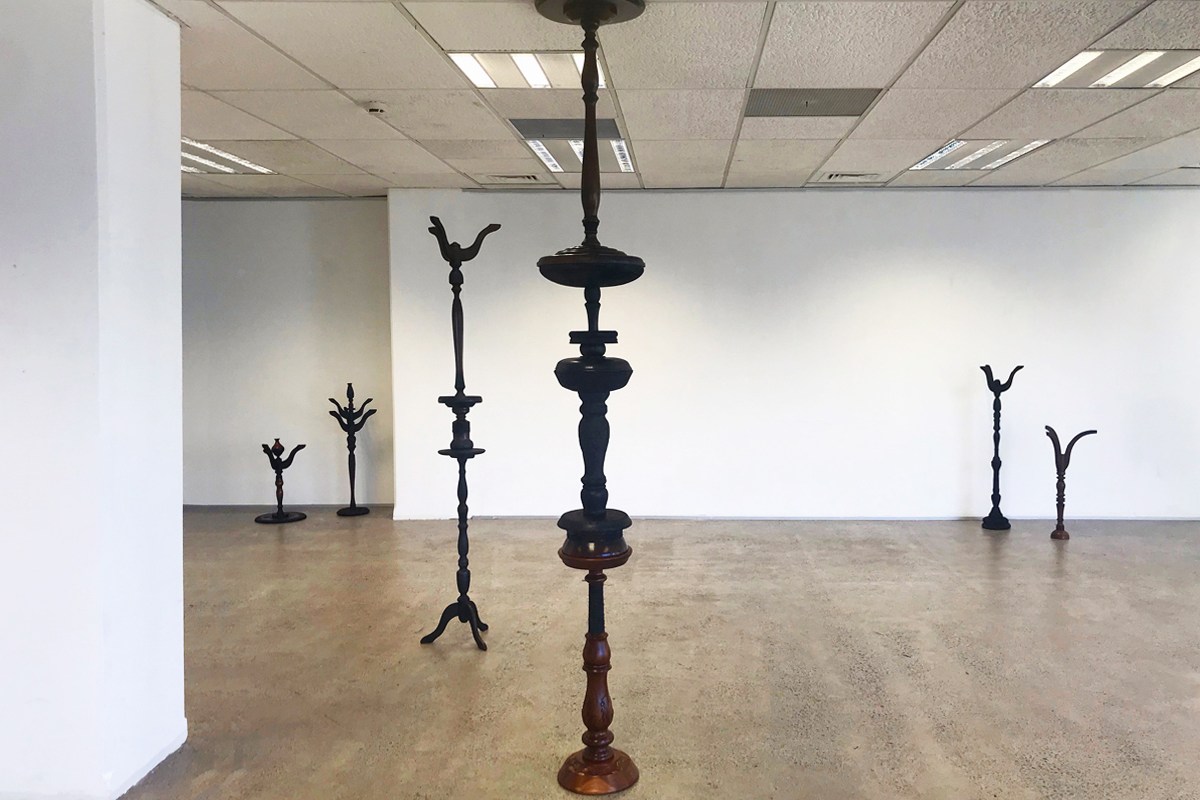
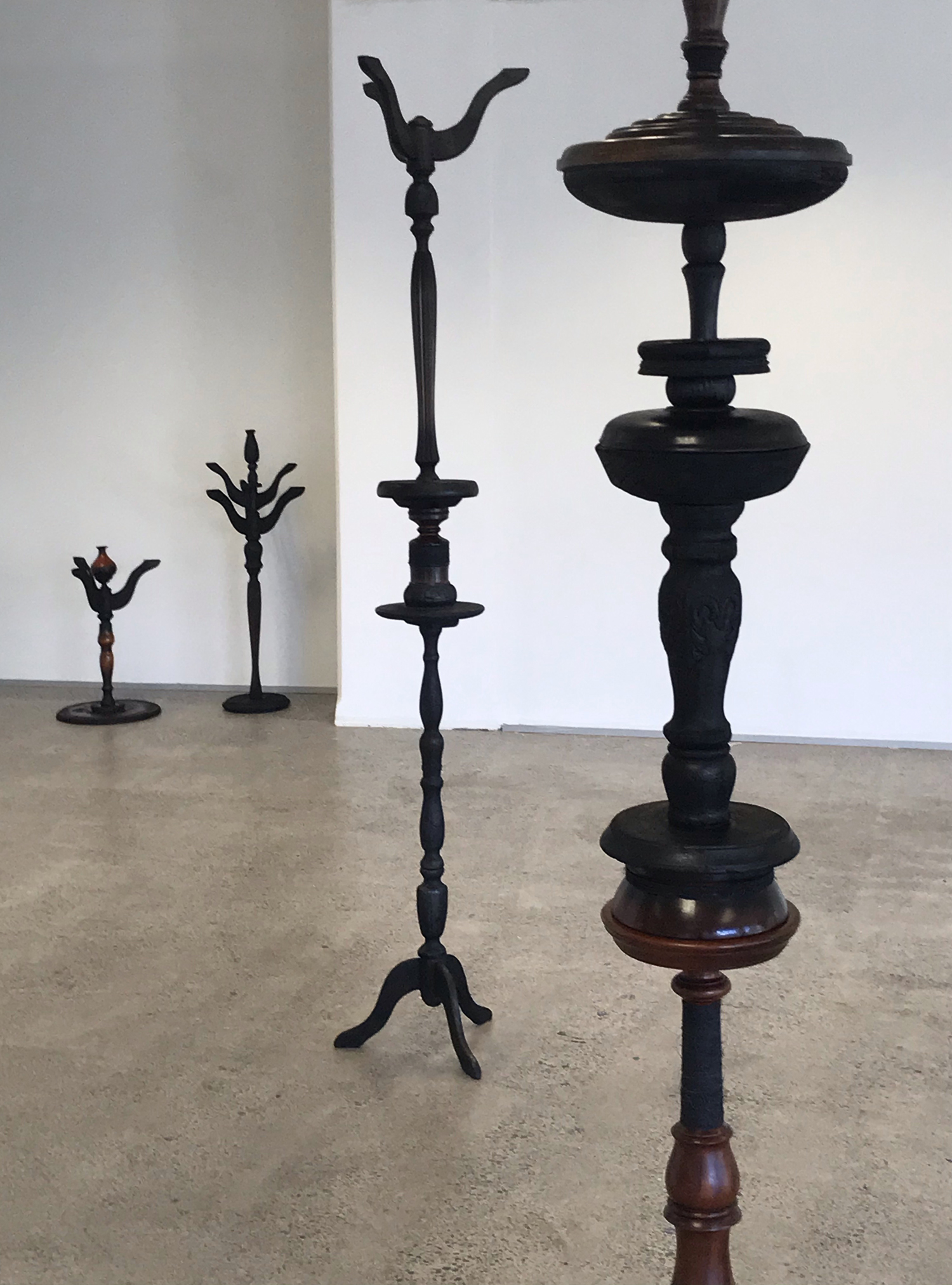
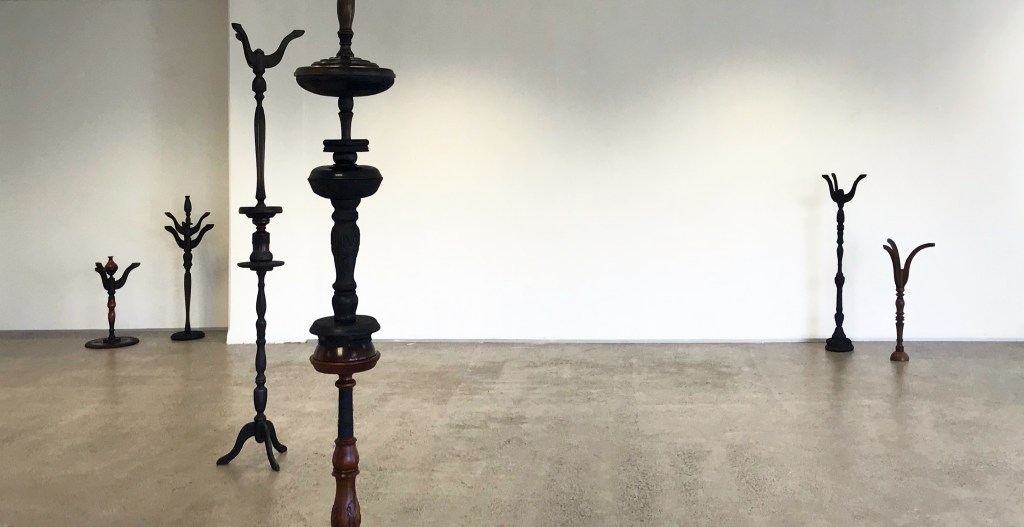
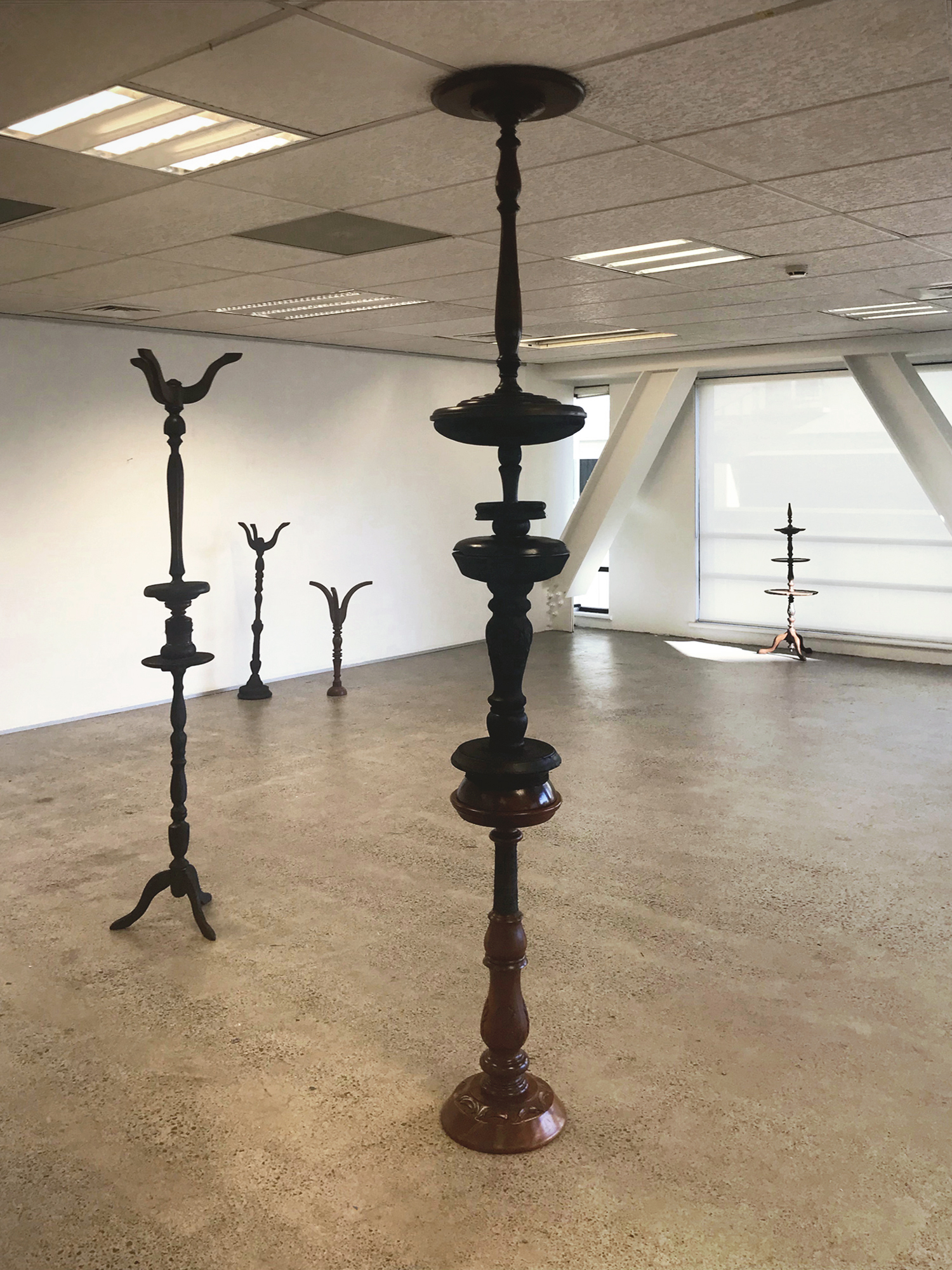
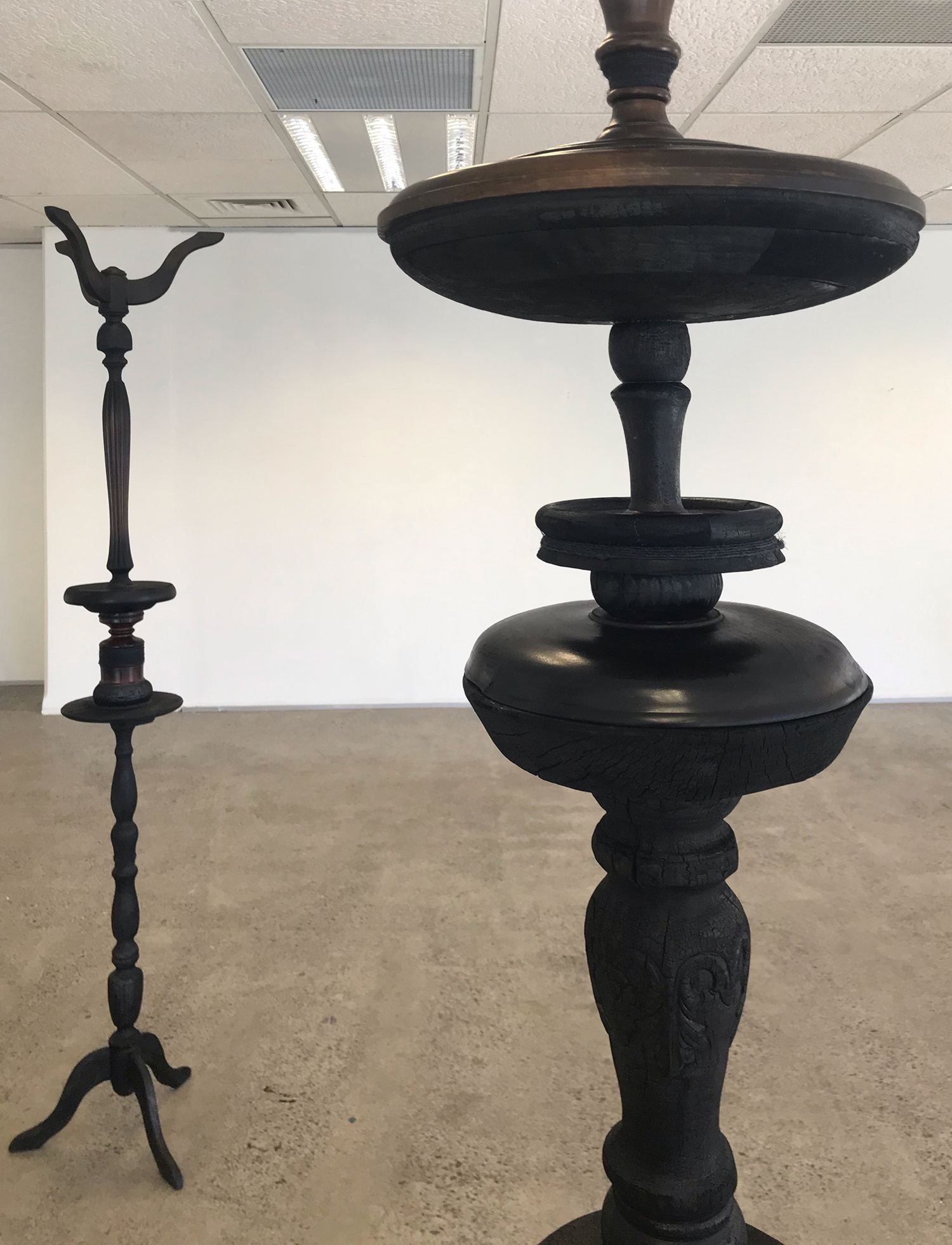
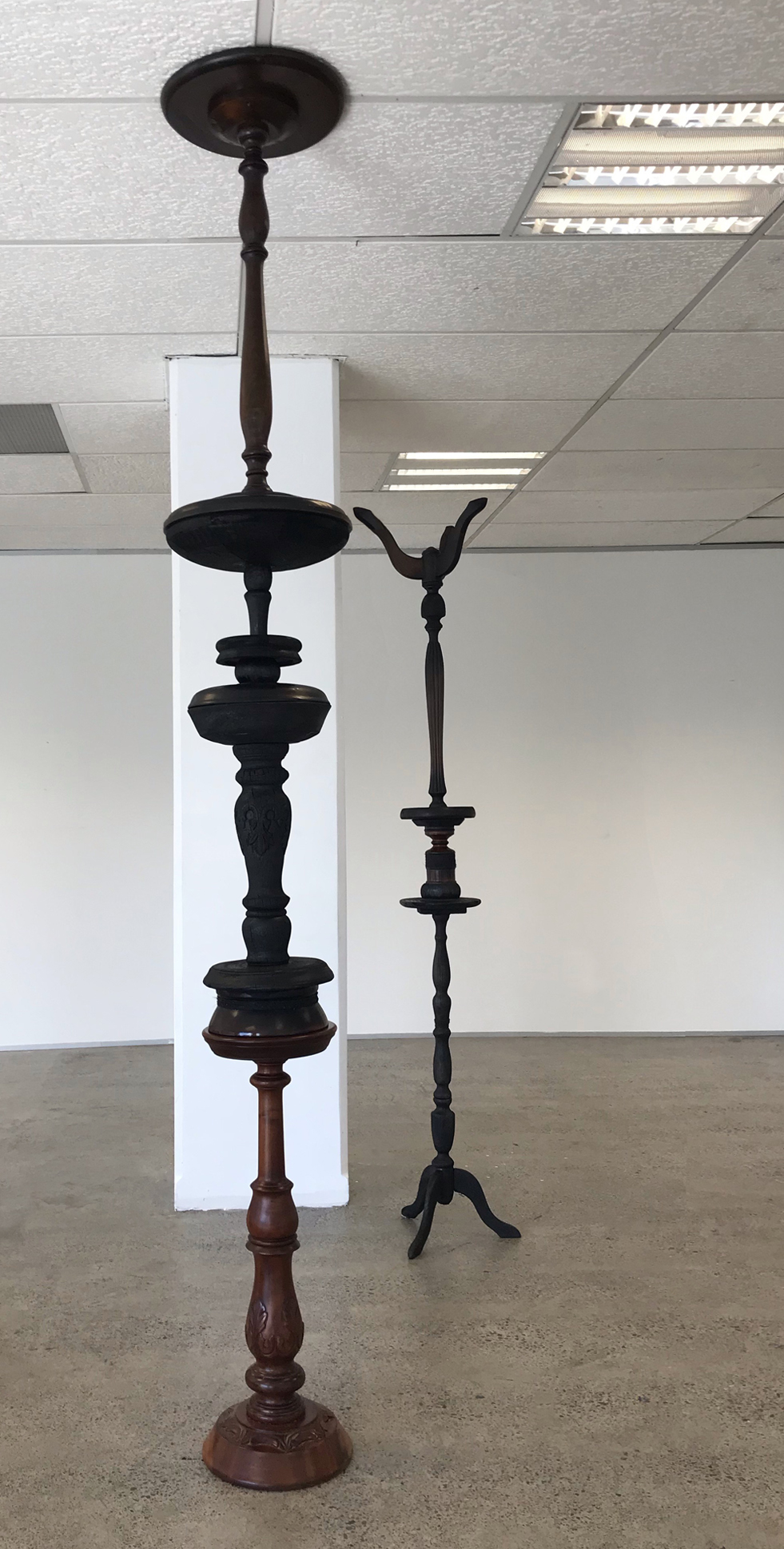
Abbie Read             To the Fallen,   2021

colonial plant stands and wooden pedestals (burnt), wooden vases (charred), blackened twine

.

Ode to the Fallen, to the earth made bare,

For the blackened stumps supplanted

This forest, this grove once vibrant, once lush

For this is the architecture, of loss

.

These passive plinths, these static stand-ins, artifice or artifact.

Carved columns emblazoned with non-native flora 

Display decorative plant-life from distant kingdoms

For this is the architecture, of exchange

.

Family Tree Whakapapa

On visiting the exhibition Family Tree Whakapapa: Elin, Madeleine, Sarah and Suzanne Slavik, at the Long Gallery, Pah Homestead, 21 April – 13 June 2021

This exhibition, featuring the collective works of four sisters, portrays trees in their relationships to both the natural and the man-made world.

I was particularly taken by the works of Suzanne Slavik and her Tree of Life series.

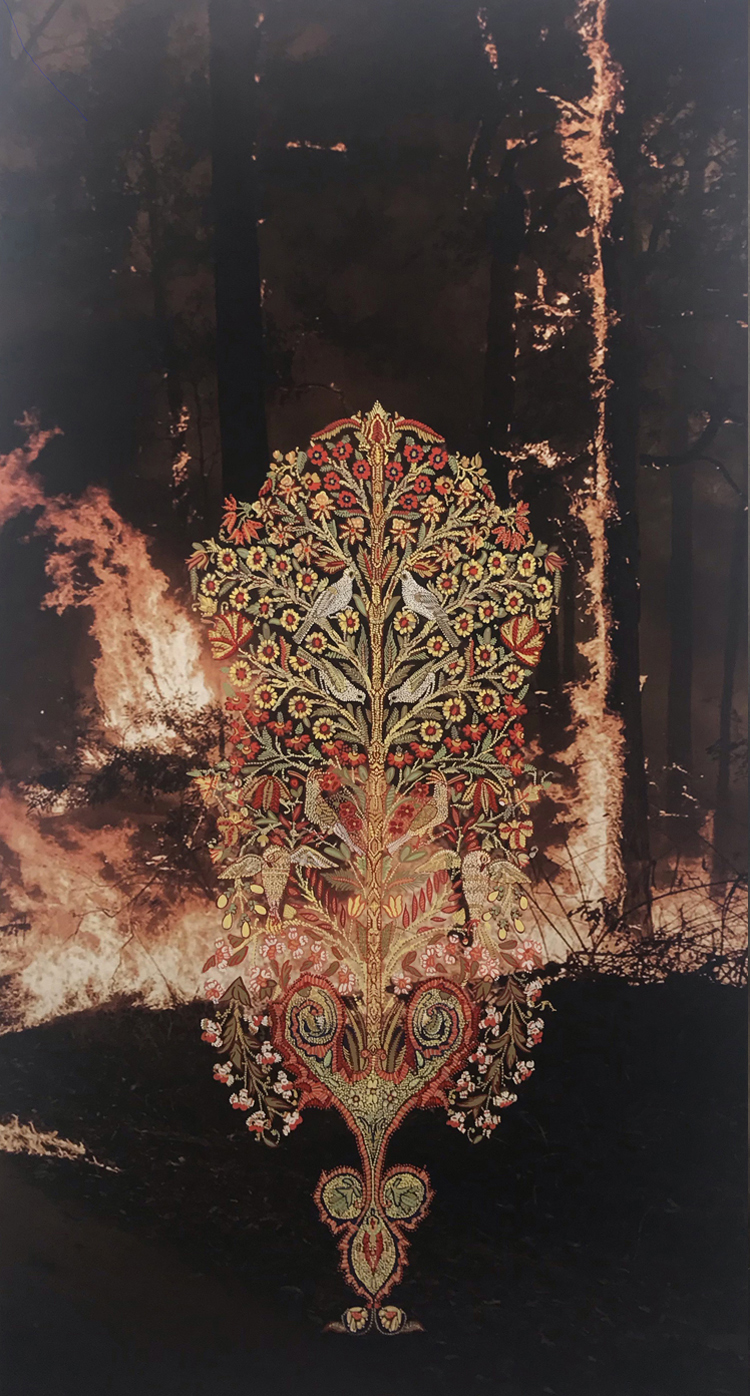
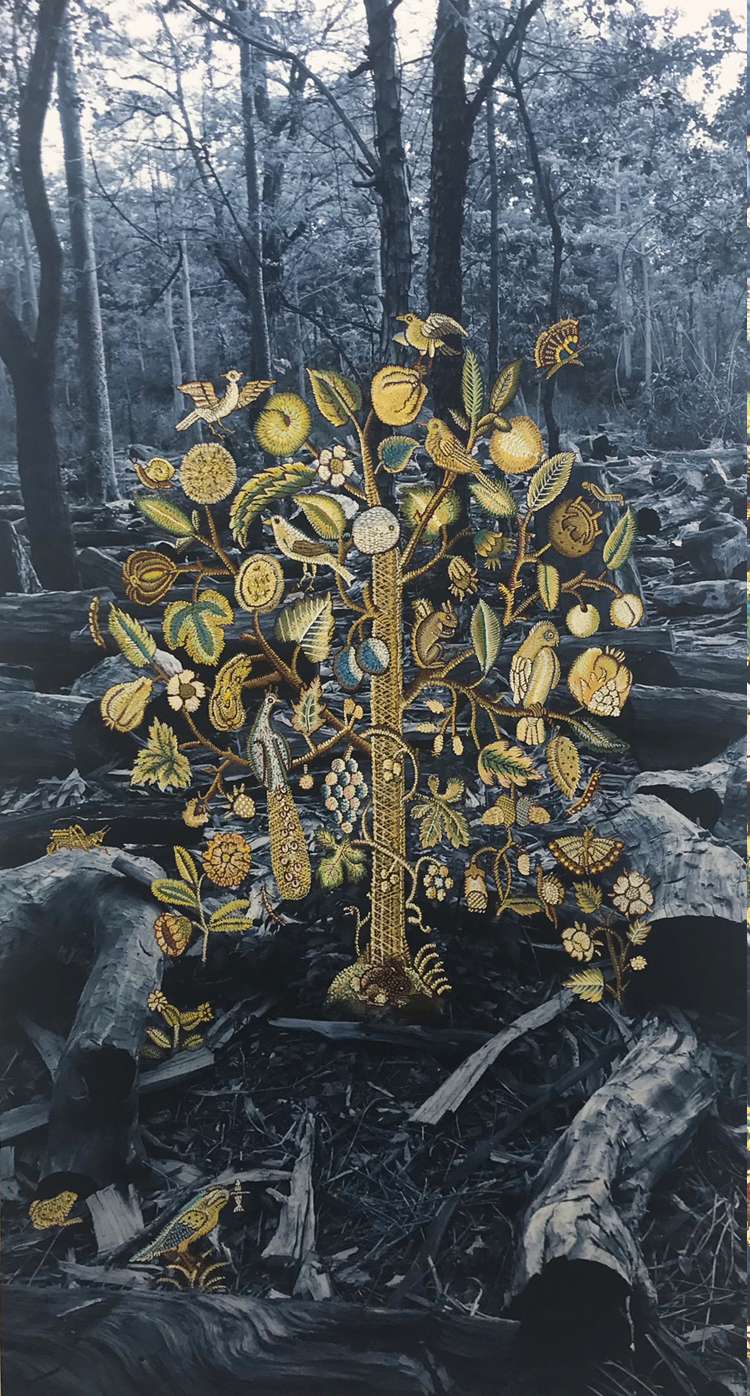
Figures 1. – 3.

Decorative painted motifs overlay photographic depictions of brutalised forests and seem to question perceptions of the binate value of trees as merely tradable commodity or picturesque adornments.

The patterned motifs specifically reference ‘Tree of Life’ carpet designs from diverse cultural contexts. The bold, colourful stylised ornamentation brightly optimistic in contrast to the photographically documented depredation of woodlands which rests behind. There is a global commonality in these two themes. Yet these trees in pattern-form endure also; regenerating and passing through different geographies, cultures and timelines.

In this way Slavik (Suzanne), references artisanal techniques from cultural backgrounds outside of her own, and utilises the creative talents of other, unknown craftspeople.

These works therefore belie a simple authorship as they rely, in some part, on a combined archive of artistic practice; like genealogical and botanical roots, these influences entwine and sprout anew.

This unwitting collaborative format is one which continues to intrigue me, and finds preserve within my own art practice.

Illustrations:

Figure 1. Suzanne Slavik Tree of Life: New South Wales, 2020.

Sources: Matthew Abbott, New York Times, A fire in Hillville, New South Wales. Southeast persian Tree of life carpet design , 19th century.

Figure 2. Suzanne Slavik Tree of Life: Yellowstone, 2020.

Sources: Raymond Gehman, National Geographic, YellowstoneNational Park, USA. Kurdish Tree of Life carpet design.

Figure 3. Suzanne Slavik Tree of Life: Nepal, 2020.

Sources: Simon de Trey White, World Wildlife Fund UK, Nepal firewood. Tree of Life design from English embroideredcanvas, first half 17th century, Metropolitan Museum of Art, NY.