
The artwork submitted for September Seminar (An unsolicited Acculturation, 2020) was comprised of the following objects:
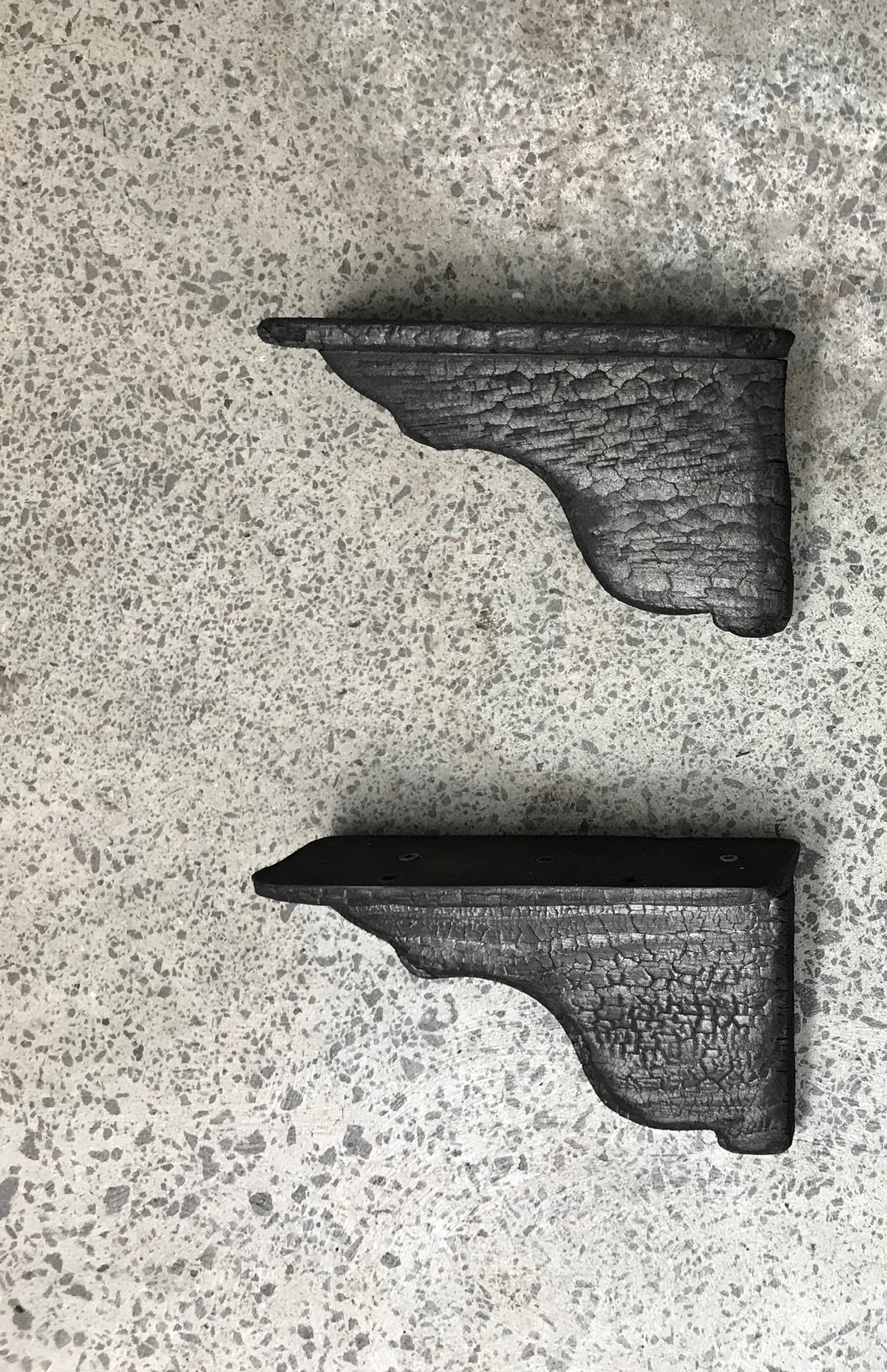

- charred decorative wall brackets (2x 2 pairs)
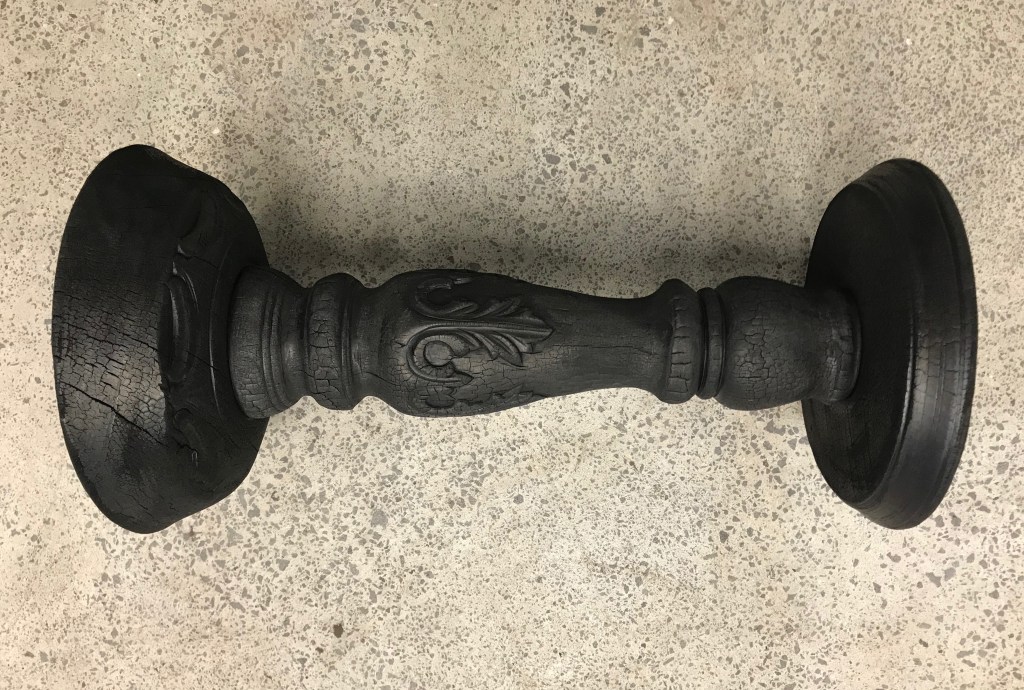
- charred colonial pedestal (with stylised acanthus carving)
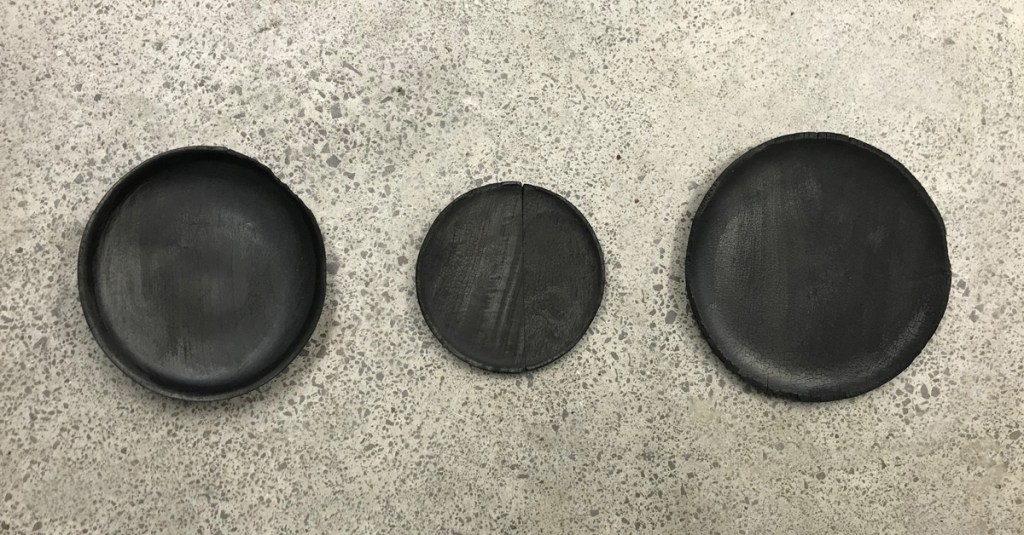
- charred decorative platters (x3)
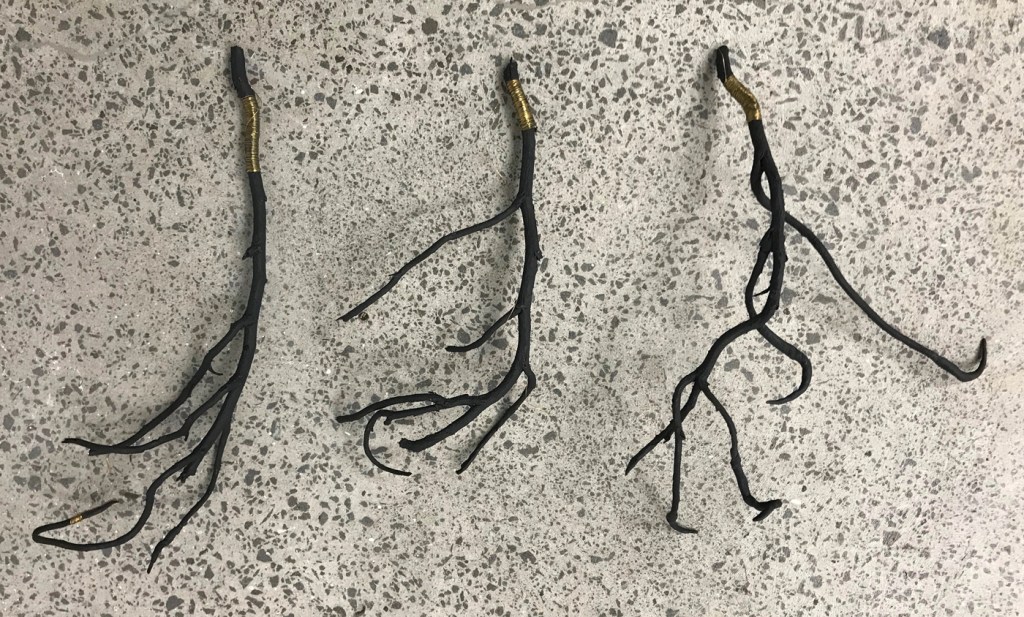
- black painted root systems bound with antique gold thread (x3)
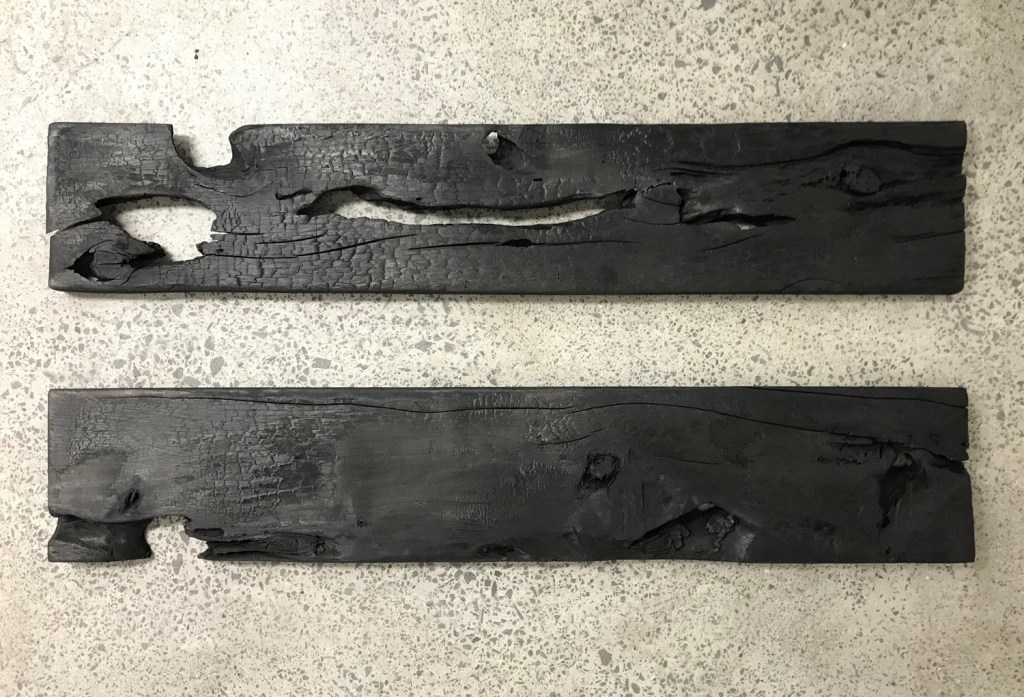
- decayed charred wooden planks (x2)
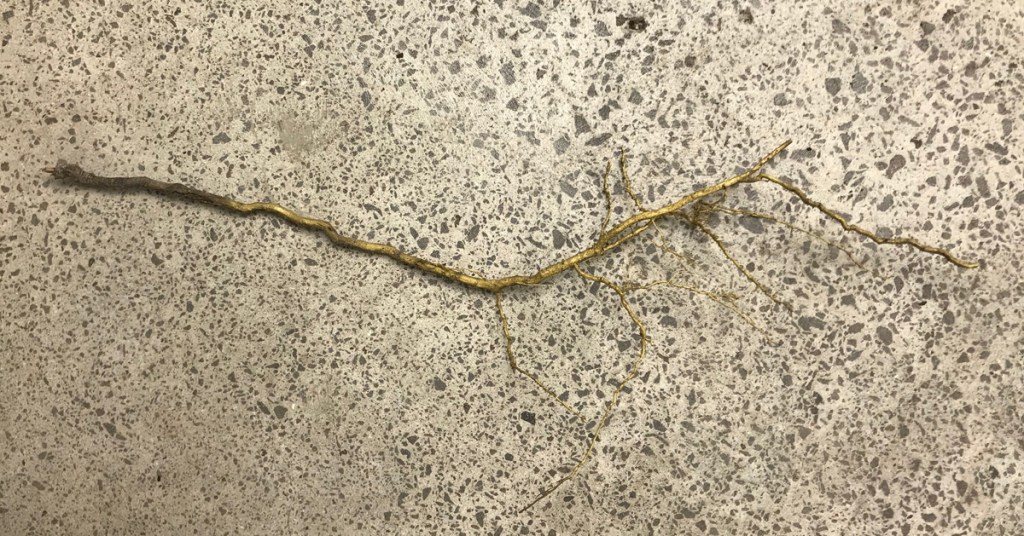
- gold painted root
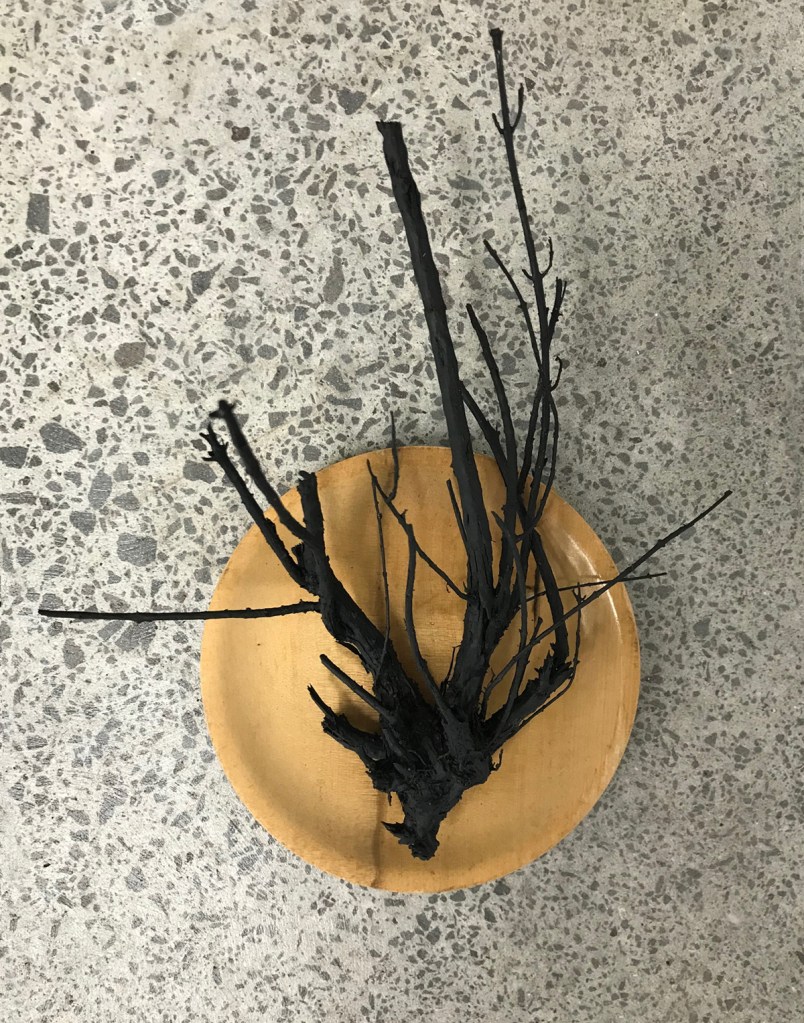
- black painted root on uncharred decorative plate
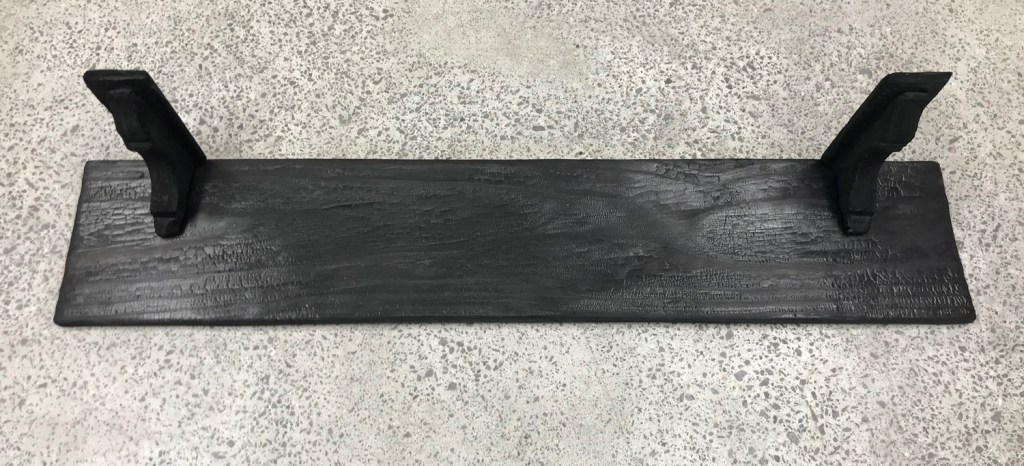
- charred wooden shelf with decorative brackets (inverted)
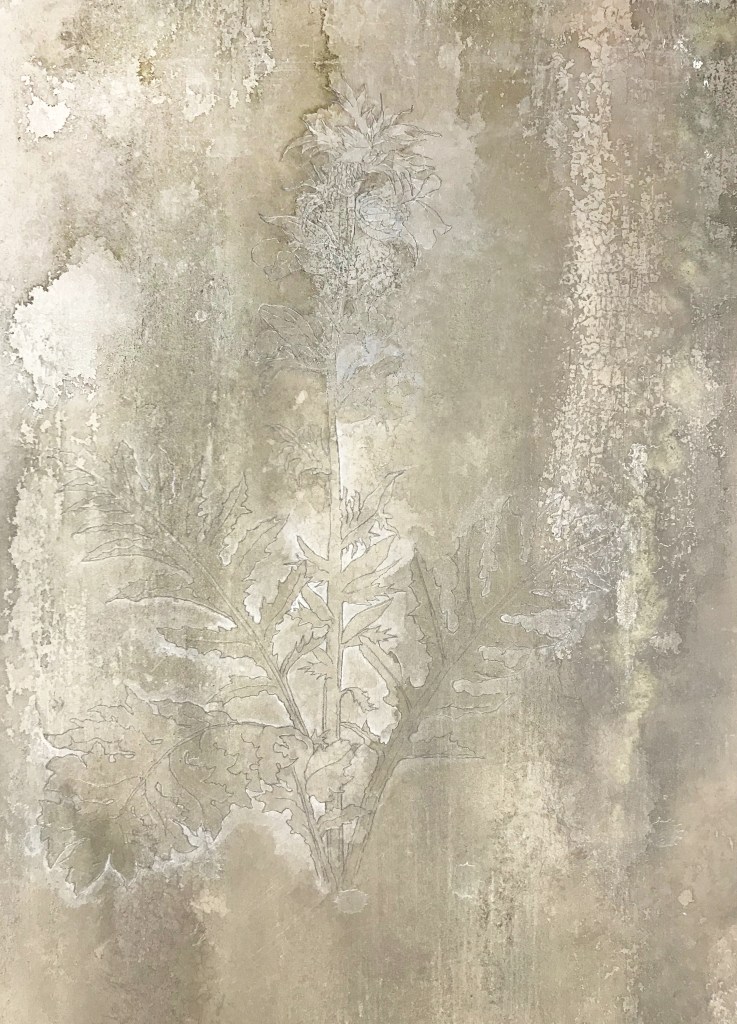
- botanical drawing of an acanthus on distressed grey painted hardboard

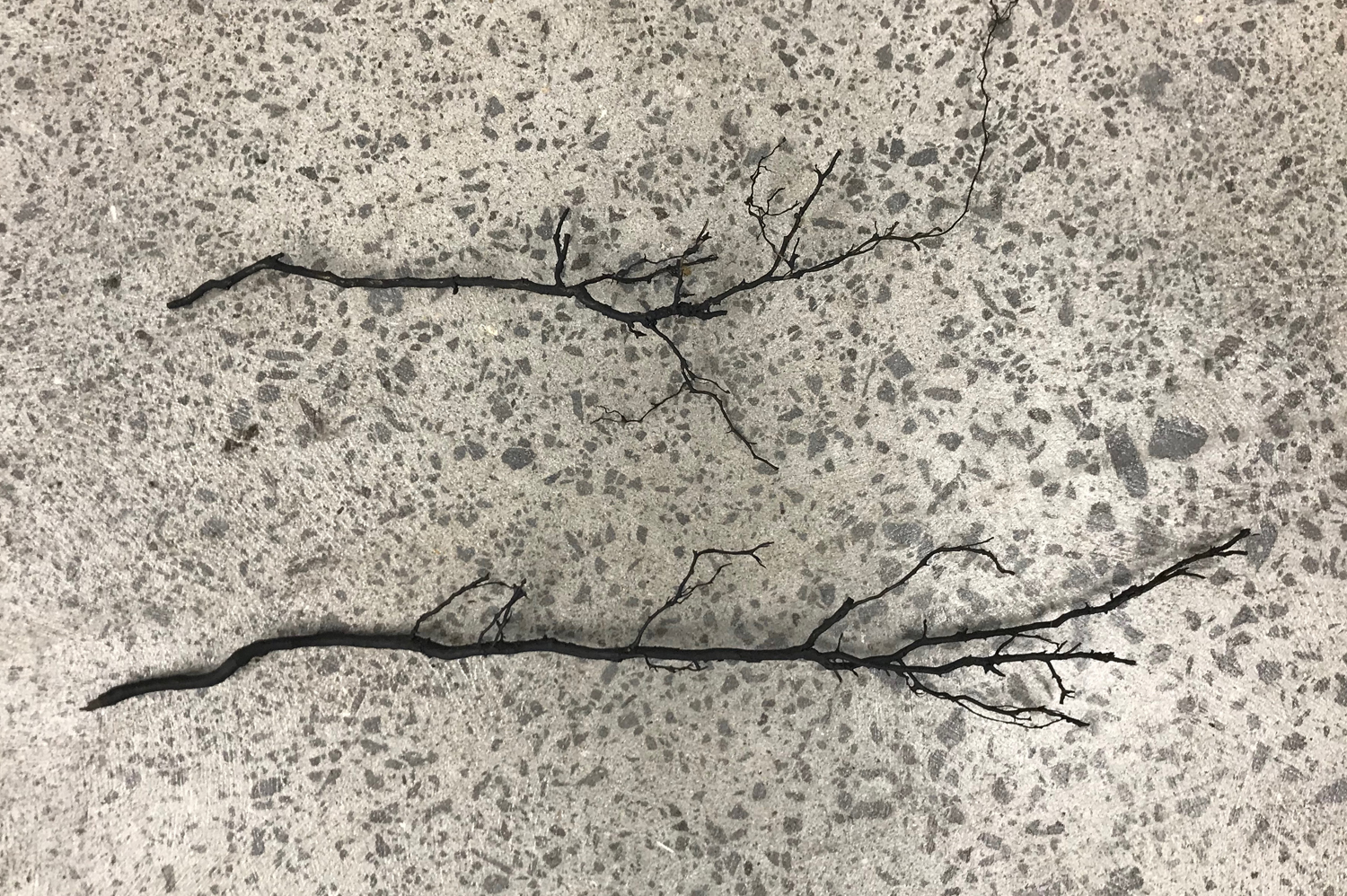
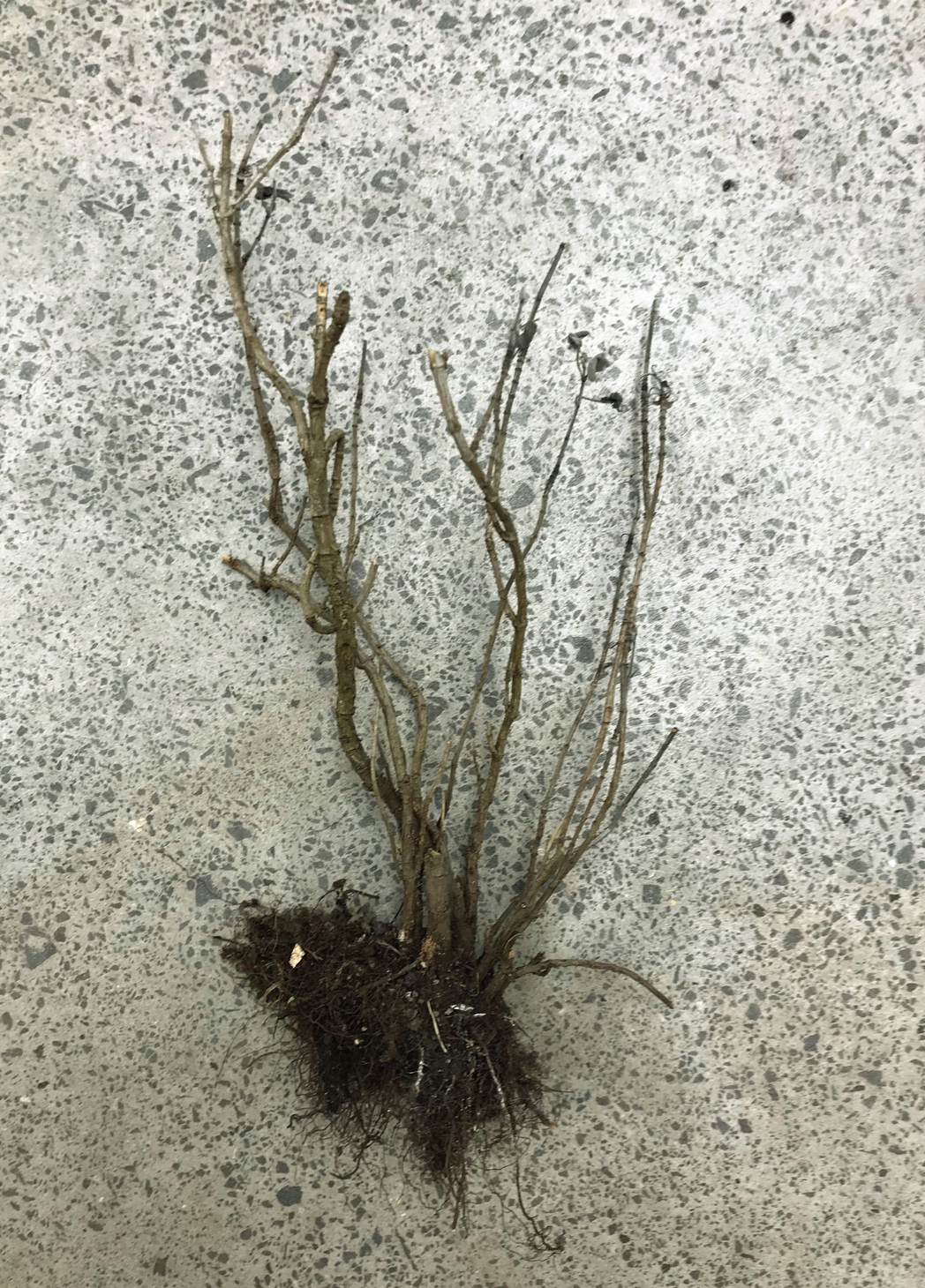
- other root systems (painted and natural)
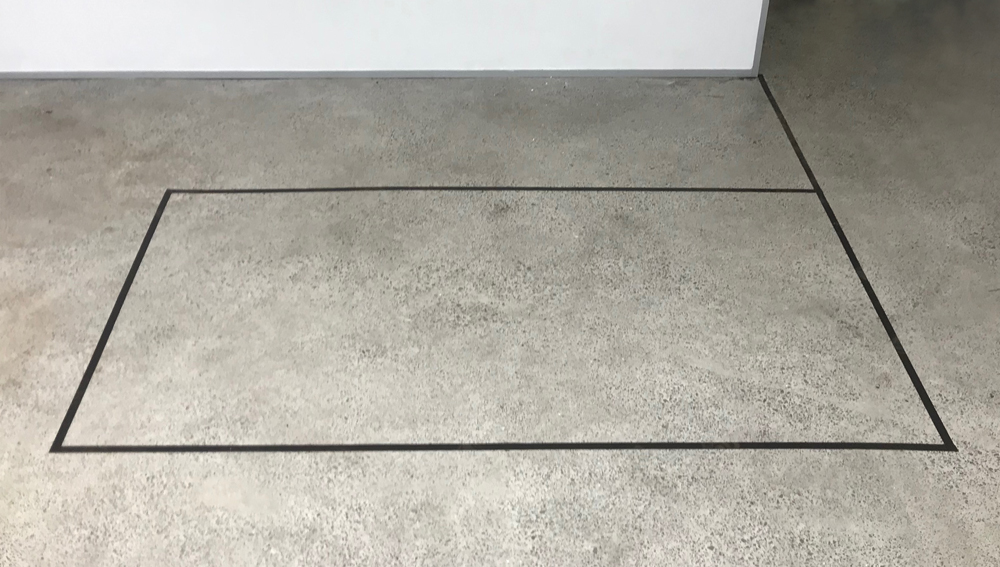
- matte black boundary tape
Group Crit (including Abbie, Glenn, Wendy, Malaki, Megan, Sonja, Jonathan and Dane):
I initially asked for a cold read in order to gauge what associations potential viewers might make without any additional explanatory information. Here are some notes of the comments made:
- Charred wood pieces, tree roots or branches – some painted, some natural with wire (thread)
- Tape – a grid system employed as a display structure
- There seem to be 4 different groupings
- Layout appears very considered. Has required time, effort and thought
- Gold (or copper) on wood is a surprising element, an extra enhancement
- Shelves: incomplete, not necessarily usable as such (some have screws, some don’t)
- It resembles a crime scene. Definitely leans to a forensic read
- It’s almost performative, but like a still life of the aftermath of an event
- The charred quality gives the sense that something has happened, or will happen; a consideration for some further act perhaps
- Or perhaps it’s a “look what I found”, possibly from the same site – but the plant drawing adds an aspect of time
- Rendering burnt vs. natural – process speaks heavily
- Time and age
- A house that has bunt down? Sad, distressed… this is all I have left (grouping & arrangements)
- The odd one out: the painting of the plant and the uncharred plate
- The painting is interesting as it skews the reading; a rendering of plant life
- Tape leading to the wall. Is it part of the wall?
- Footprints are noticed on the tape – boundaries have been broken by someone
- Tape possibly acting like a painting structure, framing the work?
- Theatrical – the colour and type of tape mark – reminiscent of places of performance…
- Or of an art gallery – so as not to move too close (but not necessarily here as the tape is too close to the objects
Comments after the reading of the artist’s statement:
- All the elements are about modes of display (shelves/platters/pedestal)
- Not read as shelves (the two holey ones read as planks but of no practical value as they are too worn)
- These objects have a resonance to human presence
- Is there a performative aspect to the work?
- That is the interesting moment… “you kill things to look at them”
- Modes of display: inspection. Trying to reckon with them in a taxonomical way – a formal happiness. They belong together because they come from the same place
- Burning – prioritise this. The moment – you don’t know what happened first
- Display – not normal; the displayed rendered useless
- Archeological dig – objects not in a museum’s vault but haven’t quite made it out to exhibition
- Japanese charring / ikebana (with the roots?). Muted tones. Window displays encountered at a shop? (maybe that’s to do with scale)
- The weed work – not an easy set. Liked trying to see how things fit – decayed/painted. Set and preserved… botanical illustration
- It seems found… sits alongside different modes of operation and connections
- Discarded now. Even though they are dislocated. I’m missing something?
- The forensic read: preservation, looking at them together and the way they sit oddly together
- Care taken in the arrangement. Trying to work out the rules/parameters of arrangement
- The roots all face the centre suggesting cyclical nature
- Plates and plinths are display items/relate to display
- Reminded of Anthony Gormley’s Field for the British Empire with an overwhelm of multiple iterations of floor bound objects
- Binding at the joints – the painting frame also (some binding pre-charring some post)
- Didactic/simplified or reduced. The gold contributes more onto this (a consideration)
- There’s a narrative quality in the layout/the grid
- I go back to a house that has been burnt. But there are aspects that make you want to go elsewhere – painting on a twig?
- Mainly ritual
- The Domestic – not there with the plants – gnarly strong opposition to the roots and other construction objects – things growing on their own then not
- What has been pre-bound and what has happened pre-binding?
- The painting, is really important. It adds another layer – a sense of consideration. The binding functions like the drawing
- Cyclic nature with the arrangement of plants and objects
- Narrative quality – grid
- Observation, decoration and display brought together
Overall evaluation:
The floor layout, with its taxonomical (and even forensic and archaeological) associations felt true to my sensibilities and art practice. It also felt true to the museological timeline I feel that it references. The mode of display itself alludes to certain established museological rites.
As Simon Sheikh points out in Constitutive Effects: The Techniques of the Curator (2007), museums have their own performative rituals; exhibitions perpetuate the cycle of certain modulated behaviours and values and it is not only the objects or artworks being curated but the potential audience also. (p.175)
The tape lines on the ground create a formal delineation; a containment; a set or a subset. Continuing these demarkations to meet with the wall incorporates the gallery itself as part of the site-specific context.
The Ikebana reading was unexpected but as a Japanese traditional technique, alongside that of the yakisugi wood charring, it forms another potential layer of unconscious cross-cultural entanglement.
To me, one of the more interesting aspects of the work is that all the objects are in places or positions they are not usually found. Theirs is a literal ‘uprooting’; they have been removed from their original contexts either by orientation, geography or placement. In conforming primarily to the mode of display their practical application has been rendered useless. What could be a more apposite rendering of nature morte than an uprooted plant? A literal ‘still life’.
It was very informative to note how the inclusion of the painting (and to a lesser extent the gold thread bindings and uncharred plate) was an important agitator to what might otherwise have been a binary and simplistic read. The work needs a couple of disruptions like these.
It was interesting to note who made what comments as often each read provided a direct correlation to their own art practices; a reminder perhaps that all audiences bring their own filters, issues and concerns.
I feel that there is an additional intimation as yet undiscussed. Any depiction of burning wood or trees, especially when encountered alongside colonial furniture, must (subconsciously or otherwise) bear a relationship to the consequent ‘scorched earth’ policies surrounding land ownership in New Zealand. This is charged and potent territory and requires further investigation and a respectful awareness to all concerned.
References:
Sheikh, Simon. 2007. ‘Constitutive Effects: The Techniques of the Curator’. In: Paul O’Neill, ed. CURATING SUBJECTS. Amsterdam: De Appel, pp. 174-185

